Jump Float Serve in Volleyball: Technique, Tips and Drills

The jump float serve in volleyball combines the unpredictable flight of a float serve with an approach and jump. Instead of creating topspin, the server tries to contact the ball cleanly with very little rotation, allowing the ball to move unpredictably through the air.

A good jump float serve can put considerable pressure on the opponent’s serve receive. The jump allows the player to contact the ball higher and farther into the court, while the floating flight makes it difficult for passers to predict exactly where the ball will travel.

This guide explains how to jump float serve, how to coordinate the toss, approach and jump, where to contact the ball, which mistakes to avoid, how to improve accuracy and how coaches can train the technique during volleyball practice.

DSC4222 Myrthe

Want to develop your complete serving technique? Also explore our volleyball serving guide, learn the standing float serve, discover the topspin serve and find practical volleyball serving drills.

What is a jump float serve in volleyball?

A jump float serve is an overhand volleyball serve in which the player uses a short approach, jumps and contacts the ball with a firm hand while trying to create as little spin as possible.

The technique is based on the same principle as a traditional float serve. A ball with very little rotation can move unpredictably as it travels through the air, making it more difficult for passers to judge its final trajectory.

The jump adds several advantages. The player can contact the ball higher, serve from farther inside the court after takeoff and often produce more speed while still maintaining the floating effect.

How to jump float serve

The jump float serve requires the toss, approach, jump and arm swing to work together. Consistency is more important than maximum speed, especially while learning the technique.

  1. Start behind the end line: leave enough space for your approach and takeoff.
  2. Use a controlled toss: toss the ball in front of your hitting shoulder and into the path of your approach.
  3. Begin your approach: move forward with a repeatable rhythm rather than accelerating too aggressively.
  4. Take off behind the end line: jump forward and upward toward the ball.
  5. Reach high: contact the ball at the highest comfortable point in front of your hitting shoulder.
  6. Use a firm open hand: strike the center-back area of the ball with a solid contact.
  7. Avoid brushing over the ball: the goal is minimal rotation rather than topspin.
  8. Continue forward after contact: land naturally inside the court after the serve.

A successful jump float serve should feel controlled. The approach and jump create momentum, but the player still needs a clean and stable contact to keep unnecessary spin off the ball.

Want to help players develop more effective serves?

Use VolleyballXL to find serving drills, technical exercises and complete volleyball training inspiration.

myrthe stefan

The jump float serve toss

The toss is one of the most important parts of the jump float serve. If the toss changes from serve to serve, the player is forced to adjust the approach, jump and contact point every time.

The ball should generally be tossed in front of the hitting shoulder and into the serving path. The exact height depends on the player’s approach and jumping style, but the toss should give enough time to approach and reach the ball without forcing the player to wait in the air.

  • Keep the toss controlled: excessive height makes timing more difficult.
  • Toss forward: the ball should allow the server to move through the serve instead of jumping straight upward or backward.
  • Reduce spin on the toss: a stable toss makes clean float contact easier.
  • Use the same release point: consistency in the toss creates consistency in the entire serving movement.

Coaches should spend time training the toss separately. Many problems that look like arm-swing or contact problems actually begin with an inconsistent toss.

Jump float serve approach and footwork

The jump float approach is usually shorter and more controlled than a full attacking approach. The purpose is to create forward momentum, reach a higher contact point and put the server in a stable position to contact the ball.

Players may use slightly different step patterns depending on their dominant hand and individual technique. What matters most is that the approach is repeatable and synchronized with the toss.

Technical elementWhat to focus onCommon problem
Starting positionLeave enough room behind the end lineStarting too close and limiting the approach
First stepsControlled and repeatable rhythmApproaching too fast
Final stepMove into a balanced takeoffLosing balance before the jump
TakeoffJump forward and upwardJumping only vertically
Body positionStay balanced behind the ballDrifting too far underneath or past the ball

How to contact the ball

The contact determines whether the serve floats. The server should use a firm open hand and strike near the center-back area of the ball.

The wrist and hand should remain stable through contact. Instead of brushing over the ball as with a topspin serve, the player tries to make a short, clean contact that sends the ball forward with minimal rotation.

  • Contact the ball high and in front of the hitting shoulder.
  • Use the center of the hand to create a solid contact surface.
  • Keep the hand and wrist firm.
  • Aim through the center-back of the ball.
  • Avoid wrapping the hand around the ball.
  • Avoid brushing over the top of the ball.

A small amount of rotation does not automatically make the serve ineffective, but excessive spin usually reduces the unpredictable floating movement.

How to make a jump float serve float

The floating effect comes primarily from sending the ball through the air with very little rotation. This makes clean contact more important than simply hitting the ball as hard as possible.

To create a better float:

  • Reduce spin on the toss: a rotating toss makes clean contact harder.
  • Use a firm hand: avoid a loose wrist at contact.
  • Hit through the center of the ball: off-center contact often creates unwanted spin.
  • Keep the contact short and clean: do not brush across the surface of the ball.
  • Prioritize consistency before speed: first learn to produce a stable float, then gradually increase serving speed.

Players should watch the ball after contact. If it rotates quickly, the contact can usually be improved. When the ball shows little rotation and changes direction slightly during its flight, the player is producing the desired floating effect.

Jump float vs standing float vs jump topspin serve

The jump float serve is one of several serving options. Each technique creates a different type of pressure on the opponent.

ServeContactBall flightMain advantage
Standing float serveFirm contact with minimal spinFloating and unpredictableControl and consistency
Jump float serveFirm contact with minimal spinFaster floating trajectoryHigher contact point combined with unpredictable movement
Jump topspin serveFast arm swing with topspinPowerful and downward-curvingSpeed and attacking pressure

The jump float serve does not need to be as fast as a jump topspin serve to be effective. Its value comes from combining speed, placement and an unpredictable trajectory.

Where should you aim a jump float serve?

A technically good serve becomes much more effective when the server also chooses a useful target. Instead of simply serving hard into the middle of the court, players should learn to recognize weaknesses in the opponent’s serve receive.

TargetWhy it can be effective
Between two passersCreates hesitation and communication pressure
Short zoneForces a deep passer to move forward
Deep cornerPushes the passer backward and reduces attacking options
Weak passerTargets the player with the least stable serve receive
Near the sidelineReduces the available passing angle
Specific rotation weaknessCan disrupt the opponent’s preferred offensive pattern

Players can use our guide to volleyball serving zones to train more deliberate placement.

The best servers can combine different depths and directions without changing their normal serving technique. This makes it harder for the receiving team to anticipate the target.

Common jump float serve mistakes

Most jump float serving problems come from inconsistent timing or from trying to generate too much power before the basic technique is stable.

  • Tossing the ball too high: this makes timing more difficult and often forces the server to wait for the ball.
  • Tossing too close to the body: the player cannot move forward naturally through the serve.
  • Putting too much spin on the toss: this makes clean float contact harder.
  • Approaching too fast: excessive speed can reduce balance and control.
  • Contacting the ball too low: the player loses the advantage of the jump and higher contact point.
  • Using a loose wrist: unstable hand contact often creates unwanted spin.
  • Brushing over the ball: this creates topspin instead of a float.
  • Trying to hit maximum power: speed without clean contact often removes the floating effect.
  • Serving without a target: a technically good serve is more valuable when it also puts pressure on a specific passer or court area.

How to teach the jump float serve

Coaches should usually teach the jump float serve progressively. Players benefit from first understanding clean float contact before adding more approach speed and jumping complexity.

  1. Develop standing float contact: teach players to hit the center of the ball with minimal spin.
  2. Practice the toss: repeat the serving toss without hitting the ball.
  3. Add simple footwork: connect the toss to a controlled forward approach.
  4. Add the jump: focus on taking off in a balanced position behind the end line.
  5. Combine toss, approach and contact: serve at moderate speed while maintaining minimal ball rotation.
  6. Add target zones: develop serving direction and depth.
  7. Add pressure: use scoring games, serving streaks or tactical targets.

A useful progression is to judge the serve first by contact quality, then by consistency, then placement and finally serving pressure. This prevents players from sacrificing the floating contact simply to create more speed.

Jump float serve drills

Jump float serve drills should train more than simply getting the ball over the net. Players need repetition in the toss, timing, contact, placement and eventually tactical serving decisions.

DrillHow it worksMain focus
Toss repetitionPlayers repeatedly perform the toss and approach without hittingToss consistency and timing
Float contact drillPlayers serve from a shorter distance and focus on minimal ball rotationClean contact
Serve and check spinPlayers observe the ball after every serve and evaluate its rotationFloat quality
Target servingPlayers jump float serve toward selected zonesAccuracy
Short vs deep servePlayers alternate between short and deep targetsDepth control
Serve the seamPlayers target the space between two passersTactical serving

When training the jump float serve, avoid rewarding only speed. A faster serve is not automatically a better serve. Coaches should reward clean contact, limited rotation, consistent execution and effective placement.

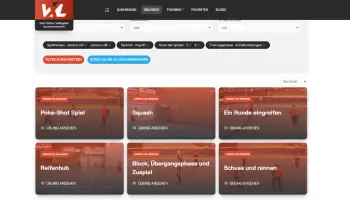
VolleyballXL has a large database of volleyball drills for different skills, positions and training goals. Below, we have selected a group of exercises that focus specifically on serving technique and serving accuracy. These drills are ideal for integrating the jump float serve, allowing players to work on their toss, approach, ball contact, placement and serving pressure within structured practice situations.

Bounce serve

  • U18
  • Seniors
  • Serveren

Goal of the drill:
Serve long balls.

Explanation of the drill:
Place a box on the baseline between positions 1 and 6, which we refer to as 16 or 56. The exact location is not critical, as the primary focus is on the depth of the serve. The serve must land in front of the box and, after one bounce, strike the box. If successful, the team earns a point. The objective is to accumulate 24 points, ensuring that, on average, each player scores four times. Alternatively, you can implement a rule requiring each player to score at least four times. This exercise helps players practice delivering deep serves toward the baseline.

Watch drill

Recognizing ball path on serve from Position 1

  • U18
  • Seniors
  • Onderarms
  • Serveren

Goal of the drill:
The goal of this drill is to improve the serve receive of player 6 by receiving and processing different serve variations, ensuring the pass to the setter (player S) is optimal. Additionally, it promotes teamwork and communication within the team during the serve receive and execution of the rally.

Explanation of the drill:
Player 6 is in the ready position for serve receive at position 6, while player O at position 1 serves the ball straight ahead or to the left of player 6. Player 6 assesses the ball’s trajectory, moves to the ball, and delivers a pass to player S at position 2/3, who receives the ball. Player S then rolls the ball back to the server. The organization: Team A, the serving team, and Team B, the receiving team, remain in their positions for a certain amount of time or number of rallies before switching sides. Variations: Team A serves a mix of high or flat serves and deep or short serves while playing against Team B. The team that first reaches 10 points wins, and Team B earns a point for a service error by Team A or when they successfully pass the ball and it is caught overhead by S.

Watch drill

Serve pressure

  • U18
  • Seniors
  • Serveren
  • Aanvallen
  • Onderarms

Goal of the drill:
Pass, set, attack, and serve under pressure

Explanation of the drill:
Server Challenge: Servers should apply full pressure. A missed serve does not award points to the passer, allowing for 100% aggressive serving. Servers earn points from aces, shanked passes, or when the setter fails to properly set the ball. The drill includes three passers, with one on standby. There are left and right front attackers, plus a setter. A passer who successfully defends and executes a strong attack becomes the new attacker. The game is played to 15 points, after which players rotate positions.

Watch drill

Serve – Pass with 3 Passers

  • U18
  • Seniors
  • Onderarms
  • Serveren

Goal of the drill:
Improve the serve receive and attacking collaboration between passers and setter in rally situations.

Explanation of the drill:
Player 1 serves alternately to the passers in positions 1, 6, and 5, who then deliver a pass to the setter S in positions 2/3. The player receiving the pass gets a set-up from S and is then allowed to attack. The organization: Player A moves to R2, then R2 goes to R1, and R1 becomes a passer in position 1, 6, or 5. After a certain time, S switches with another player. Variants: The players’ attack starts from the back row, with setter S penetrating from position 1 or 4 before delivering the set-up.

Watch drill

Recognizing ball path on serve from Position 6 (3)

  • U18
  • Seniors
  • Onderarms
  • Serveren

Goal of the drill:
Improve the serve receive and communication when receiving different serve variations.

Explanation of the drill:
Player 6 is in the serve receive position at position 6, and player O serves to his left or right. Player 6 assesses the ball’s trajectory, moves to the ball, and delivers a pass to player S at position 2/3, who receives the ball. Player S then rolls the ball back to the server. The setup: Team A, the serving team, and Team B, the receiving team, remain in their positions for a certain period or a set number of rallies before switching sides. Variations: Team A serves a mix of high or flat serves and deep or short serves while playing against Team B. The team that first reaches 10 points wins, with Team B earning a point for a service error by Team A or when they successfully pass the ball, which is then caught overhead by S.

Watch drill

Recognizing ball path on serve from Position 6 (1)

  • U18
  • Seniors
  • Onderarms
  • Serveren

Goal of the drill:
The goal of this drill is to improve the serve receive and passing of the players by forcing them to move and respond appropriately to different types of serves. Additionally, the transition to the serving position is practiced, allowing players to quickly anticipate the situation after the pass.

Explanation of the drill:
Player A serves to P1 or P2, who then make a pass to position 3. The non-passing player intercepts the pass at position 3 and goes to serve, while R1 takes the position of the player who intercepted the pass. If P1 or P2 cannot make a good pass on the serve, the player closest to the ball retrieves it and serves. The organization: Player A plays the ball to R, who then sets it to Player P1 or P2, who subsequently serves. Variations: Player A serves in a way that forces P1 or P2 to move, after which Player A executes their match serve.

Watch drill

Jump float serve strategy

Once the technique becomes consistent, players should learn to use the jump float serve strategically. The objective is not always to serve an ace. A serve can be highly effective if it forces the opponent into a poor pass and reduces their attacking options.

Before serving, look at the opponent’s receiving formation and consider:

  • Which passer is struggling?
  • Is there a large seam between two passers?
  • Is one passer standing unusually deep?
  • Can a short serve force a player forward?
  • Can a deep serve push a passer away from their preferred position?
  • Which serve will make it hardest for the opponent to run their preferred offense?

Advanced servers can also vary the starting position along the end line. Serving from different angles changes the ball’s path through the reception formation and can create new pressure without requiring a different serving technique.

Jump Float Serve FAQ

What is a jump float serve in volleyball?

A jump float serve is an overhand serve where the player uses an approach and jump before contacting the ball with a firm hand and minimal spin. The goal is to create an unpredictable floating trajectory.

How do you do a jump float serve?

Use a controlled toss in front of the hitting shoulder, approach the ball, jump from behind the end line, reach high and contact the center-back of the ball with a firm open hand while minimizing spin.

How high should you toss a jump float serve?

The toss should be high enough to give you time to complete your approach and jump, but not so high that you have to wait for the ball. Consistency and forward placement are more important than maximum toss height.

Should a jump float serve have spin?

The goal is to create as little rotation as possible. Minimal spin helps produce the unpredictable floating movement that makes the serve difficult to pass.

What is the difference between a float serve and a jump float serve?

Both techniques aim for minimal ball rotation. A standing float serve is performed from the ground, while a jump float serve uses an approach and jump to create a higher contact point and additional forward momentum.

What is the difference between a jump float serve and a jump topspin serve?

A jump float serve uses firm contact with minimal rotation to create unpredictable movement. A jump topspin serve deliberately creates topspin and usually relies more heavily on speed and a downward-curving trajectory.

Where should you aim a jump float serve?

Useful targets include seams between passers, short areas in front of deep passers, deep corners and specific receivers who are struggling with serve receive.

Improve your jump float serve

A consistent jump float serve begins with a repeatable toss and approach. From there, focus on jumping into a balanced position and making clean contact with the center-back of the ball using a firm hand.

Do not chase maximum serving speed too early. First learn to produce a ball with minimal rotation, then develop accuracy and finally increase serving pressure through more speed, difficult placement and tactical variation.

Continue developing your serve with our volleyball serving guide, float serve guide, topspin serve guide, serving zones guide and our collection of volleyball serving drills.

Want to develop more consistent and effective servers?

Use VolleyballXL to find practical serving drills, coaching tips and complete training ideas for every level.

myrthe stefan