Volleyball serving games and drills for beginners

Looking for volleyball serving drills to improve accuracy, power, consistency, and game pressure? This page helps volleyball coaches train the volleyball serve with focused exercises for beginners, youth players, middle school players, high school teams, and more advanced teams. Use these serve drills to work on underhand serves, overhand serves, float serves, jump serves, target serving, and pressure situations.

This page focuses specifically on serving. For a complete overview of drills for every volleyball skill, visit our volleyball drills and training tools page.

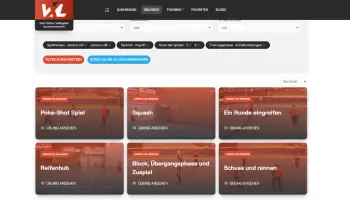
Card image
u18, Seniors
Bounce serve
Card image
u12, u18
Service stroke
Card image
u18, Seniors
Recognizing ball path on serve from Position 1
Card image
u18, Seniors
Serve pressure
Card image
u12, u18
Serve ditto
Card image
u12, u6
Serve against the wall

Serve drills for accuracy, power and consistency

What serving drills can you use to improve a volleyball serve? VolleyballXL offers serve drills and serving games on video, designed for coaches who want to train accuracy, power, consistency, and control under pressure. These exercises help players move from simple serve repetition to purposeful serving with targets, scoring, and match-like pressure.

A strong serving practice should include different types of exercises: accuracy drills, consistency drills, pressure serving, beginner serve drills, and games that connect the serve to real rally situations. This helps players understand that the serve is not just a way to start the rally, but a weapon to put the opponent under pressure.

Volleyball serving drills for beginners

For players who are new to volleyball, beginner serving drills are essential. These drills help players build a reliable serving motion, understand ball contact, and develop confidence from the service line. A simple starting point is the wall serve drill: players stand a short distance from a wall and practice the serving motion by hitting the ball against the wall. This helps beginners repeat the correct movement without the pressure of a full court.

If you are looking for broader beginner training ideas, you can also view our beginner volleyball training drills.

3 tips for beginner serving drills

Serving is one of the most important skills to master early in volleyball. For beginners, the focus should be on confidence, consistency, and controlled ball contact. A good serving drill gives players a clear goal, enough repetition, and direct feedback after every round.

  1. Use clear target zones on the court
    Mark areas such as the deep corners, short zones, or middle-back area. This helps beginners learn to serve with direction and gives them instant feedback on placement.
  2. Have players say their serving target out loud
    This increases focus and teaches intentional serving. For example: “I’m aiming for the deep left corner.”
  3. Use short serving rounds with many repetitions
    Keep the intensity high by working in sets of 5 to 10 serves per player. Give one clear coaching point after each round.

Underhand serve drills for volleyball beginners

The underhand serving drill is a useful starting point for new volleyball players. It helps beginners develop a consistent serving motion, controlled ball contact, and basic accuracy. Players can start close to the net and gradually move farther back as their serve becomes more reliable. Add target zones to help them learn direction and placement.

A simple underhand serve drill is the distance challenge. Players begin close to the net and serve to a large target area. After three successful serves, they take one step back. This keeps the drill achievable while gradually increasing the difficulty.

Get more inspiration, create more enjoyable training sessions effortlessly, and bring more fun to your players.

Discover the possibilities of VolleyballXL.

myrthe stefan

Overhand serve drills for volleyball players

As players improve, they can move from underhand serving to overhand serving drills. These exercises focus on toss control, body position, arm swing, power, and accuracy. Coaches can let players serve from different positions behind the end line to help them understand angles, trajectory, and pressure from different serving zones.

An effective overhand serve drill is the toss-and-freeze drill. Players toss the ball, prepare their hitting arm, and freeze before contact. The coach checks body position, toss height, and balance. After that, players complete the serve. This helps players build a repeatable overhand technique before adding more power.

Serve accuracy drills

Serving accuracy is one of the most important parts of a strong volleyball serve. Instead of only asking players to get the ball over the net, give them clear target zones. Use deep corners, short zones, seams between passers, or a specific player as the serving target. This helps players learn to serve with purpose.

A simple accuracy drill is the target zone challenge. Divide the opposite court into several zones and give each zone a point value. Players serve in short rounds and try to score as many points as possible. This keeps serving practice focused, competitive, and easy to measure.

Serve consistency drills

Consistency is essential for every volleyball server. A player who can serve with control under pressure gives the team a major advantage. Serve consistency drills should focus on repeatable technique, a stable toss, controlled ball contact, and a clear serving routine before every serve.

One useful exercise is the 10-in-a-row serving challenge. Each player tries to serve 10 balls in a row into the court or into a selected target zone. If a player misses, they start again or lose a point. This teaches players to stay focused and repeat the same serving motion under pressure.

Pressure serving drills for volleyball

Pressure serving drills help players learn to serve when the score matters. Add consequences, time limits, or match-point situations to make serving practice more realistic. For example, let every player take one serve at 24-24. A successful serve scores a point for the team, while a missed serve gives a point to the opponent.

You can also create team pressure by asking players to serve to a target before their team can rotate or finish the drill. This makes every serve important and helps players deal with the mental side of serving in volleyball.

Float serve drills for volleyball

Float serve drills help players create a serve that moves unpredictably in the air. The focus should be on a firm hand, clean contact in the middle of the ball, and limited follow-through. Players should first learn to hit a stable float serve before aiming for difficult zones.

A useful float serve exercise is the no-spin challenge. Players serve and try to make the ball cross the net with as little spin as possible. Teammates or the coach watch the ball flight and give feedback. Once players can control the float, add target zones to combine movement with accuracy.

Jump serve drills for volleyball

Jump serve drills are best for players who already have a consistent overhand serve. These exercises focus on toss timing, approach rhythm, jump technique, arm swing, and ball contact at the highest point. Start without the net or with a simplified approach before asking players to serve with full power.

A good jump serve drill is the toss-approach-contact progression. First, players practice only the toss and approach. Then they add the jump and catch the ball at the highest point. Finally, they complete the full jump serve. This progression helps players build timing before adding speed and pressure.

Fun volleyball serving games

Serving practice becomes more effective when players enjoy the challenge. A serving target challenge is a simple and fun service game: place cones, hoops, or marked zones on the court and let players score points by hitting specific areas. This improves serve accuracy while adding a competitive element to training.

You can also use serving games where players compete in pairs or teams. For example, one team serves to a target zone while the other team counts successful serves. After each round, teams switch roles. This keeps practice active and gives players a clear goal every time they step behind the service line.

Serving drills for middle school players

Middle school serving drills should be simple, active, and confidence-building. At this level, players often need many repetitions while still learning the correct serving motion. Use short rounds, clear targets, and simple scoring systems to keep players motivated.

A good middle school exercise is serve and move. Players serve to a target zone and then quickly move into a defensive base position. This connects serving with the next action in the rally and helps young players understand that the serve is the start of the point, not a separate skill.

Serving drills for high school players

High school serving drills can be more tactical and competitive. Players should learn to serve to specific passers, attack weak zones, and use different types of serves depending on the situation. These exercises should combine serving technique with decision-making.

A strong high school drill is serve to strategy. The coach gives each player a serving target before the serve, such as deep zone 1, short zone 2, or the seam between two passers. After the serve, the team plays out the rally. This teaches players how serving can create pressure and influence the opponent’s first pass.

Youth serving drills

Youth volleyball serving drills should help players build confidence and enjoy serving practice. Keep the instructions simple, use large target areas, and reward progress. Young players need many successful repetitions before moving to harder targets or more advanced serving techniques.

A useful youth exercise is the serving ladder. Players start close to the net and move one step back after every successful serve. If they miss, they stay at the same distance. This gives players a clear challenge and helps them gradually build strength, control, and confidence.

Serving practice at home

Players can also work on their serve outside team practice. Simple serving exercises such as serving against a garage door, aiming at a marked target, or practicing the toss and contact point can help players improve consistency. For a broader overview of exercises for all volleyball skills, visit our volleyball drills and training tools page.

When practicing serving at home, players should focus on the parts of the serve they can safely repeat: toss height, arm swing, contact point, and serving routine. Even without a full court, players can improve their timing and control by repeating the same movement with clear attention to technique.

Volleyball serving games for practice

Serving games should focus on repetition, accuracy, and decision-making under pressure. Instead of letting players serve without a goal, give every serve a purpose. Use targets, zones, points, or team challenges to make practice more realistic and competitive.

From serve drills to volleyball service games

A simple serving drill can feel flat without pressure. To turn a technical exercise into a volleyball service game, add a clear target and scoring system. Place visible zones on the court and assign points to each zone. For example, a serve into the deep corner scores 2 points, a missed serve costs 1 point, and an ace scores 3 points. This teaches players to serve with purpose.

You can also connect the serve to rally play. Let Team A serve to Team B and play out the rally. If Team A wins the rally after putting pressure on the pass, they score 2 points. If Team B sides out, they score 1 point. This makes serving practice more game-like and helps players understand how a strong serve can influence the rally.

Whether you are coaching youth players, beginners, middle school players, high school players, or a more advanced team, volleyball serving drills should help players build confidence, accuracy, power, and consistency. By using clear targets, short rounds, and game-like pressure, coaches can turn serving practice into one of the most valuable parts of training.

Want to explore drills for passing, setting, attacking, blocking, digging, and team play as well? Go to the main volleyball drills and training tools page.

FAQ about serving drills

What is the purpose of volleyball serving drills?

The purpose of volleyball serving drills is to improve serving accuracy, power, consistency, and confidence under pressure. These drills also help players master different serving techniques, such as underhand, overhand, float, and jump serves.

How can I make my volleyball serve more powerful?

To increase the power of your volleyball serve, focus on a consistent toss, strong body position, good arm swing, core strength, and clean ball contact. Serving drills with targets and repetition help players combine power with control.

What is a good serving drill for volleyball beginners?

A good serving drill for beginners is the underhand serving drill. Players focus on the basic serving motion, controlled ball contact, and serving the ball consistently over the net. Adding target zones helps beginners improve accuracy.

How can I improve serving accuracy in volleyball?

To improve serving accuracy, practice serving to specific target zones on the court. Use cones, hoops, or marked areas and ask players to aim for deep corners, short zones, or seams between passers.

Are there specific volleyball drills for jump serves?

Yes, jump serve drills focus on toss timing, approach rhythm, jumping technique, arm swing, and ball contact at the highest point. These drills help players combine power, timing, and precision.

What are good serving drills for middle school players?

Good serving drills for middle school players are simple, active, and confidence-building. Use target zones, short serving rounds, and games such as serve and move to help players improve control and consistency.

What are good serving drills for high school players?

Good serving drills for high school players should combine technique, tactics, and pressure. Players can serve to specific zones, target weak passers, and play out the rally after the serve.

How can players practice volleyball serving at home?

Players can practice volleyball serving at home by working on their toss, arm swing, contact point, and serving routine. If there is enough safe space, they can also serve against a wall, garage door, or marked target area.