Volleyball communication drills

Are balls not being called? Is there confusion about who does what? Do your players seem out of sync during rallies? If so, it’s time to start training team communication more intentionally.

At VolleyballXL, we’ve developed a range of fun and effective drills to help improve your team’s communication. These volleyball communication drills are designed specifically for coaches who want to build a close-knit team that plays with flow and understands each other on the court.

Show your colours

  • U12
  • U18
  • U6
  • Seniors
  • Verdedigen

Goal of the drill:
Improve agility

Explanation of the drill:
Place two players facing each other with a third player (positioned along the sideline) calling out colors. This role can also be filled by a coach for larger groups. Create a line of various colors, positioned 4 meters away from the players. When a color is called, each player sprints to that color, taps it, and quickly returns to their starting position. Once both players are back, the next color is called. Turn this into a competition by calling out colors for one minute. The player who is quickest to touch the color and return earns a point. The player with the most points wins.

Watch drill

Block Pepper Trio

  • U18
  • Seniors
  • Aanvallen
  • Blokkeren

Goal of the drill:
Increase reaction speed after an action

Explanation of the drill:
Three players engage in a pepper drill, with the setter positioned in the middle. After setting, the setter raises their hands as if to block. The opposing player spikes the ball over the setter’s head. The setter may attempt to block or deflect the ball. Both the attacker and the defender must remain vigilant and anticipate the ball’s unpredictable trajectory. After two to three minutes, the players rotate positions.

Watch drill

Pass, Set & Attack Cross Part 1

  • U18
  • Seniors
  • Aanvallen

Goal of the drill:
Getting warm and improving control

Explanation of the drill:
Two teams compete against each other with the objective of keeping the ball in play. A diagonal hit is executed from one position to the defender. The player at the net doesn’t block but instead quickly turns to set up the ball, making a swift transition crucial. Following the attack, players change positions. To warm up, begin by hitting from various positions, and you can expand on this later. If you have more than four players, have the additional teams wait and rotate in after the rally or after a set number of balls have been played.

Watch drill

20 set reps

  • U18
  • Seniors
  • Onderarms

Goal of the drill:
Improve movement patterns when passing from difficult positions and increase precision.

Explanation of the drill:
The coach, a pair of players, and a setter take their positions on one side of the court. The coach (or a designated player) stands at the sideline with a cart full of balls. The defensive players position themselves on the opposite side of the court.

1. The coach (or designated thrower) bounces the ball on the floor toward the receiving player.

2. The receiver passes the ball to the setter, who then sets up an attack (diagonally in this scenario, though other positions are possible).

3. The receiver sends the ball to a predetermined position near the net. If focusing on overhead passes, execute 20 overhead passes.

4. Defenders attempt to block the ball and subsequently catch it.

Coaches Tips:

– Bounce the balls at varying speeds.
– Alter the speed at which you introduce the next ball into play.

V1: Attackers provide feedback to the setter, enabling the setter to score points. How many accurate sets out of 20 can the setter execute?

Watch drill

Who bounces the ball

  • U18
  • Seniors
  • Onderarms

Goal of the drill:
Improvement of technology, periphery and communication

Explanation of the drill:
Four players are positioned in a cross formation. One player holds a ball, while another ball is either hit or dug. The player who receives the ball has three options but cannot pass to the one holding the “fixed” ball, leaving two viable options. After making a pass, the player with the “fixed” ball throws it to the player who just passed. Once you pass the ball, you receive the “fixed” ball.

Watch drill

No man’s land

  • U18
  • Seniors
  • Bovenhands

Goal of the drill:
Clean upper feed.

Explanation of the drill:
Two players, each with a ball, position themselves diagonally rather than directly opposite one another. This arrangement is crucial as each player consistently passes the ball straight ahead, requiring the receiver to accept the incoming ball either to the left or right. Alternatively, the ball can be dug up.

Watch drill

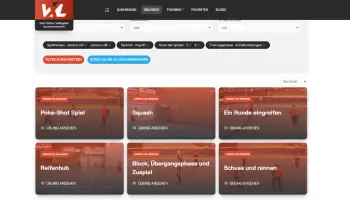
On the VolleyballXL platform, you’ll find all volleyball communication drills clearly laid out. Each one comes with a short video, giving you a direct look at how to apply it in your own training. The focus? Clear agreements, verbal and non-verbal communication, and building trust between players.

Tips & Tricks

For beginner teams:

For advanced players:

Common communication mistakes in teams

In many teams, communication breaks down at familiar moments. By identifying these mistakes and addressing them in training, you make communication a natural part of the game. Awareness is the first step toward improvement. Common situations include:

The psychology behind effective team communication

On-court communication isn’t just about tactics or technique—it’s deeply connected to team dynamics and player confidence. Many players hesitate to speak up because they’re afraid of making mistakes or being judged by teammates. Others may simply be unsure of what’s expected of them in different situations. A lack of leadership, unspoken team hierarchies, or low trust can also lead to silence at key moments. As a coach, it’s important to recognize these psychological barriers and create a safe, supportive environment where communication is encouraged, mistakes are accepted as part of the learning process, and players feel empowered to speak up.

Volleyball talking drills

Effective volleyball talking drills help players make quicker decisions, avoid errors, and work together more efficiently. By actively communicating during every rally — such as calling ball height, positioning, responsibilities, and next actions — players gain more clarity and confidence on the court. Talking drills train athletes to speak clearly, briefly, and purposefully under pressure, resulting in faster play and fewer misunderstandings in both the passing and attacking phases. At VolleyballXL, you’ll find a wide selection of talking drills with clear instructions, variations, and coaching tips, giving you everything you need to integrate communication consistently into your training sessions. This helps your team develop a solid communication routine that immediately shows results in match situations.

Coach’s Checklist: How’s your volleyball team communicating?

A simple checklist can help you make communication a consistent part of your training sessions. Ask yourself the following questions regularly:

FAQ about communication drills for volleyball

How can I improve communication within my volleyball team?

It all starts with awareness. By regularly training communication – for example, by calling every action, aligning responsibilities, and actively supporting one another – it becomes a natural part of the game. The drills on VolleyballXL are designed to help you integrate this into your training routine.

What are effective volleyball communication drills?

There are several drills you can use, depending on your team’s level. Think of exercises where players are required to communicate before every action, or where collaboration is key. On our landing page, you’ll find practical examples explained in clear videos.

How can I help my team call the ball more during matches?

By creating a safe training environment where mistakes are part of the learning process. Make communication a standard part of your warm-up and game-like drills, and reward clear communication with positive feedback. With our drills, calling the ball becomes second nature.

Which drills help with positioning and coordination on the court?

Volleyball communication drills that force players to react quickly – such as defense or rally-focused exercises – are perfect for sharpening court awareness and role clarity. At VolleyballXL, we show you how to make this both fun and educational.

How to avoid miscommunication in volleyball?

Miscommunication can be minimized by creating clear agreements within the team and practicing them consistently. Make sure every player knows their role in each situation and encourage constant communication—both verbal and non-verbal. Use drills that simulate game-like pressure, where quick decisions and clear signals are crucial. Repeating these situations in training builds confidence and mutual understanding, which reduces mistakes during matches. The drills on VolleyballXL are specifically designed to help teams improve in exactly these areas.

How to communicate as a setter?

As a setter, you are the playmaker and communication hub of the team. Clear and consistent communication is essential—both before and during the rally. Let your teammates know what play is coming, use eye contact and hand signals to guide hitters, and give verbal cues to manage tempo or adjust positioning. Between rallies, check in with your hitters about timing and preferences. A good setter leads by example: being vocal, confident, and responsive builds trust and helps the entire team stay aligned. Want to train this? VolleyballXL offers drills that strengthen the setter’s communication skills in realistic game scenarios. Read also our blog with tips for you as a setter.