Volleyball stretches

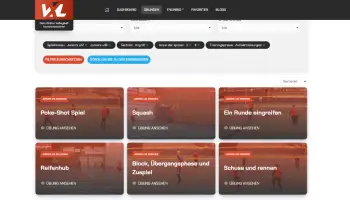
VolleyballXL offers ready-to-use volleyball stretches that you can load directly on this page as clickable example exercises. These stretches are designed specifically for volleyball and help players prepare their body for actions such as jumping, landing, serving, passing, setting, blocking and attacking.

Card image
u12
Calf stretch
Card image
u12
Hip Crossover
Card image
u12
Lateral Lunge
Card image
u12
Backward Lunge
Card image
u18
Sun salutation
Card image
u12
Sumo

In volleyball, flexibility and mobility are important parts of efficient movement. Players need enough range of motion to move low in defense, extend during attacks, rotate during serving and stay controlled during quick changes of direction. Volleyball stretches help improve movement quality, reduce unnecessary tension and prepare the body for training or match play.

Why volleyball stretches are important

Volleyball is an explosive sport with repeated jumps, fast reactions and many overhead movements. Shoulders, hips, ankles, calves, hamstrings and the lower back are all placed under regular stress. When these areas are stiff or poorly prepared, players may struggle to move efficiently or maintain good technique during longer rallies.

Good stretching routines support better posture, smoother movement and improved body control. For example, mobile ankles help players stay lower in passing and defense. Flexible hips support better approach mechanics, landing positions and lateral movement. Shoulder mobility is important for serving, spiking and setting without creating unnecessary strain.

Benefits of volleyball-specific stretching

Volleyball-specific stretches help players move better in the positions they actually use on court. Instead of doing random stretches, the focus should be on movements that transfer directly to volleyball actions. This includes preparing the shoulders for overhead contact, opening the hips for low defensive positions, and improving calf and ankle mobility for jumping and landing.

Stretching can also support recovery. After intense training, controlled stretching may help reduce muscle tension and bring the body back to a calmer state. For teams with multiple training sessions per week, a consistent stretching routine can help players maintain movement quality throughout the season.

Dynamic and static volleyball stretches

Not every stretch has the same purpose. Dynamic stretches are usually best before training or matches. These are active movements that prepare the muscles and joints for volleyball actions. Examples include walking lunges, arm swings, hip openers, ankle rocks and controlled squats.

Static stretches are usually more useful after training or during separate mobility sessions. These stretches are held for a longer time and can help improve flexibility or reduce tightness. Examples include hamstring stretches, calf stretches, hip flexor stretches and shoulder stretches. A good volleyball program uses both types at the right moment.

When to use volleyball stretches in training

Volleyball stretches can be used before, during and after practice. In the warm-up, dynamic stretches help players increase body temperature and prepare for explosive movement. During technical blocks, mobility exercises can be added when players need better range of motion for a specific skill. After practice, static stretches can support cooldown and recovery.

Short and consistent routines are often more effective than long stretching sessions done only occasionally. Coaches can use a simple structure: start with general movement, add volleyball-specific dynamic stretches, then move into ball drills. After training, finish with a few controlled stretches for the areas that were used most.

Common mistakes with volleyball stretching

A common mistake is stretching too passively before explosive activity. Long static holds before jumping or sprinting may not prepare players well for the speed of volleyball. Another mistake is using stretches that do not connect to volleyball movement. Stretching should support the actions players need on court.

Players should also avoid forcing range of motion. Stretching should create controlled movement, not pain. Quality is more important than intensity. Coaches should focus on good posture, steady breathing and correct alignment, especially with younger players who are still developing movement habits.

Who are these stretches for?

These volleyball stretches are suitable for youth, senior and performance players. Youth players can use them to build healthy movement patterns and body awareness. Senior players can use them to maintain mobility and reduce unnecessary stiffness. Performance players can use volleyball stretches as part of warm-up, recovery and long-term physical preparation.

Because every player and team has different needs, stretches should be selected based on age, training load, physical level and session goal. A beginner team may need simple full-body mobility, while an advanced team may need more specific shoulder, hip and ankle work.

VolleyballXL

VolleyballXL is a training platform with a large collection of volleyball exercises and complete training sessions. For volleyball stretches, VolleyballXL provides ready-to-use examples that fit directly into volleyball practice. Trainers can quickly find stretching exercises that match their team’s level, training phase and objectives, making it easier to build safe, structured and effective sessions without spending hours searching for reliable examples.