Half Court Volleyball Drills: How to train effectively on half the Court

11/19/2024 |

Not every volleyball practice has access to a full court. Sometimes you only have half a court available, but you still want to run an effective, active and game-like training session. That is where half court volleyball drills are extremely useful.

Half court drills help coaches make the most of limited space. Players get more ball contacts, react faster and learn to communicate in a smaller playing area. Whether you want to improve passing, ball control, defense, attacking choices or tactical awareness, half court volleyball training can turn a limited court setup into a productive practice environment.

If your main challenge is the number of players instead of court space, you may also want to explore our volleyball drills for small groups. If you are coaching many players at once, check out our volleyball drills for large groups.

Card image
u12
Double vision
Card image
u12, u18, Seniors
In the red corner

In this article: we cover the benefits of half court volleyball drills, which skills you can train, how many players you need, how to use half court drills for tactics and how to combine them with small group or large group training.

Why use half court volleyball drills?

Half court volleyball drills are designed for situations where space is limited, but the training goal remains serious. Instead of reducing the quality of practice, half court training allows coaches to create focused drills with high repetition and clear objectives.

Because the playing area is smaller, players have less time to react. They must move quickly, communicate clearly and make better decisions under pressure. This makes half court volleyball drills useful for technical training, tactical training and competitive game-like exercises.

  • Limited space: ideal when only half the court is available.
  • More repetitions: players get more touches in less time.
  • Faster reactions: smaller spaces force quicker decisions.
  • Better communication: players must call the ball and organize space.
  • Clear focus: coaches can isolate one skill or tactical situation.

Half court drills are especially useful during busy training sessions, shared gym time, station training or practices where you want to focus on a specific skill without using the full court.

Best half court volleyball drills for limited space

The best half court volleyball drills keep players active and involved. The drill should have a clear goal, simple organization and enough repetition to improve a specific skill. Half court training works especially well when you use clear target zones, quick rotations and scoring rules.

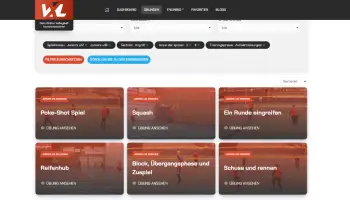
At VolleyballXL, you can find a wide range of volleyball exercises for different levels and training goals. Use half court drills to train passing, setting, ball control, defense, attack and tactical decision-making.

  • Partner passing on half court: focus on platform control, footwork and accuracy.
  • 2 vs 2 half court game: train communication, ball control and tactical placement.
  • Defense to attack: dig the ball, transition and attack into a target zone.
  • Short court rally drill: reduce the court depth to improve reaction speed.
  • Target zone drill: score points by playing the ball into marked areas.

These drills can be adapted for beginners, youth teams, high school teams and advanced players. Make the court smaller for beginners and increase speed, scoring pressure or tactical rules for advanced players.

Which skills improve with half court volleyball drills?

Half court volleyball drills are effective because they create many repeated actions in a compact space. Players are constantly involved in passing, moving, communicating and preparing for the next contact.

  • Ball control: players learn to control the ball with precision in a smaller area.
  • Passing: half court drills create many serve receive, free ball and defensive passing situations.
  • Quick reactions: the smaller court forces players to read and move faster.
  • Communication: players must call the ball, organize coverage and give clear instructions.
  • Defense: players improve court coverage, angles and defensive responsibility.
  • Attack placement: hitters learn to place the ball instead of only hitting hard.
  • Tactical awareness: players learn where space appears and how to use it.

For the best results, focus on one skill at a time. For example, use one drill for passing accuracy, one drill for defensive movement and one game-like drill for tactical decision-making.

How many players do you need for half court volleyball drills?

You do not need a full team to run a strong half court volleyball practice. Many drills work with only a few players, while others can be used with larger groups by rotating players quickly.

  • 2 players: use partner passing, setting, pepper and ball control drills.
  • 3 players: train pass-set-attack, defense to target and transition movement.
  • 4 players: play 2 vs 2 half court games or serve receive drills.
  • 5 to 8 players: use rotations, stations and competitive half court challenges.
  • Large groups: split the court into stations and rotate players between tasks.

If you are training with only a few players, use our dedicated guide with volleyball drills for small groups. That page focuses on drills for 2, 3 and 4 players. If you have many players and want to avoid long waiting times, visit our page with volleyball drills for large groups.

Half court volleyball drills for beginners

Half court volleyball drills are very useful for beginners because the smaller space makes the game easier to understand. Players can focus on basic movement, passing technique, communication and controlled rallies without being overwhelmed by the full court.

  • Keep the rules simple: focus on passing, setting and controlled contacts.
  • Use clear targets: cones, hoops or marked zones help players understand the goal.
  • Reduce speed at first: start with tosses or free balls before adding serves and attacks.
  • Reward control: give points for accurate passes, three contacts or smart placement.

For beginner players, half court training should build confidence. The goal is not only to win rallies, but to learn how to move, communicate and control the ball.

Half court volleyball drills for advanced players

Advanced players can also benefit from half court volleyball drills. The smaller court creates speed, pressure and tactical challenges. Players must make decisions quickly and place the ball with intention.

  • Add tactical scoring: reward attacks into open zones or smart tips over the block.
  • Increase tempo: use faster balls, shorter rest and quick transitions.
  • Train specific systems: work on block-defense, coverage or transition patterns.
  • Force decision-making: require players to read the defender before attacking.

For advanced players, half court drills should feel competitive and game-like. Use scoring rules to create pressure and make players solve tactical problems during the rally.

How to use half court drills to teach tactics

Half court volleyball is excellent for tactical training. Because the court is smaller, players can clearly see open spaces, defensive gaps and attacking options. This makes it easier to teach tactical concepts in a simple, repeatable way.

  • Mark target zones: use cones or tape and award points for accurate placement.
  • Train communication: ask players to call “free ball”, “short ball”, “line” or “cross”.
  • Use 2 vs 2 games: players learn to read space and defend together.
  • Focus on court coverage: teach players who covers short, deep and diagonal balls.
  • Add tactical scoring: reward smart decisions instead of only powerful attacks.

These variations help players understand not only how to perform a skill, but also when and why to use it during a match.

Short court volleyball vs half court volleyball

Coaches often use the terms short court volleyball and half court volleyball in similar situations, but they are not always exactly the same.

Half court volleyball usually means using one side or one section of the court to train with fewer players or limited space. Short court volleyball often means reducing the depth of the court, so players play closer to the net and rallies become faster.

Both formats are useful when you want to increase ball contacts, improve reactions and create competitive small-sided games. Short court variations are especially helpful for beginners, ball control drills and quick reaction training.

  • Use half court drills when you have limited court space.
  • Use short court drills when you want faster rallies and more control.
  • Combine both when you want a compact, high-repetition training setup.

Half court drills for small and large groups

Half court volleyball drills can be used with different group sizes, but the organization changes depending on how many players you have.

With a small group, every player can be involved in almost every rally. This is ideal for technical repetition, individual feedback and ball control. If this is your main training situation, use our complete guide to volleyball drills for small groups.

With a large group, the challenge is different. You need to keep waiting time low and make sure every player stays active. Use stations, clear rotations and multiple balls. For more ideas, visit our guide with volleyball drills for large groups.

This way, the half court page stays focused on limited space, while the small group and large group pages help coaches choose drills based on player numbers.

What tools enhance half court volleyball drills?

You do not need much equipment to run effective half court volleyball drills. A few simple tools can make the session more structured, competitive and easier to coach.

  • Cones or tape: create clear target zones and court boundaries.
  • Extra balls: keep repetitions high and reduce waiting time.
  • Targets: help players focus on accurate passing, setting or attacking placement.
  • Scoreboards or point rules: add pressure and make drills more competitive.
  • Video recordings: help players understand positioning, communication and tactical choices.

Simple tools can turn a basic half court setup into a focused and engaging volleyball practice.

Need more inspiration for your next volleyball practice?

Use VolleyballXL to find drills, create complete training sessions and keep every player active.

myrthe stefan

Half court volleyball drills make every training session more efficient when space is limited. By focusing on precision, teamwork, communication and tactical decision-making, coaches can create dynamic practices for every level. Use half court training to turn limited space into a valuable opportunity for player development.

Populair blogs