Underhand Serve in Volleyball: Technique, Tips and Drills

The underhand serve in volleyball is one of the easiest serving techniques to learn and is often the first serve taught to beginners. The player holds the ball in front of the body and strikes the lower part of the ball with the opposite hand to send it over the net.

Although the underhand serve is simpler than an overhand, float or jump serve, good technique is still important. Players need a stable starting position, controlled arm swing and clean ball contact to serve consistently and accurately.

This guide explains how to underhand serve a volleyball, where to contact the ball, how to improve accuracy and power, which mistakes to avoid and how coaches can train the technique during volleyball practice.

PLACE-VIMEO-URL-HERE

Want to develop your complete serving technique? Also explore our volleyball serving guide, learn about the float serve and discover our volleyball serving drills.

What is an underhand serve in volleyball?

An underhand serve is a volleyball serve performed by striking the ball from below waist height. The ball is held in one hand while the other arm swings forward from behind the body and contacts the lower-back part of the ball.

The technique requires less coordination and strength than many overhand serving techniques, which makes it especially useful for beginners and younger volleyball players.

The goal is not simply to get the ball over the net. Players should gradually learn to serve with a repeatable technique, control the direction and eventually place the ball into specific areas of the opponent’s court.

How to underhand serve a volleyball

The underhand serve consists of a few simple movements, but the timing between the step, arm swing and ball contact is important.

  1. Start in a balanced position: stand behind the end line with your feet approximately shoulder-width apart.
  2. Place the opposite foot forward: if you serve with your right hand, start with your left foot slightly in front.
  3. Hold the ball in front of your body: keep it around waist height with your non-hitting hand.
  4. Bring your serving arm back: keep the arm relaxed and prepare a straight forward swing.
  5. Step toward your target: transfer your body weight forward as the serving arm begins to swing.
  6. Contact the lower-back part of the ball: use a firm hand and strike through the ball.
  7. Continue toward the target: allow your arm and body weight to move naturally forward after contact.

Try to make the movement smooth rather than using only the serving arm. The forward step and weight transfer help generate force without requiring a very aggressive swing.

Want to help players become more confident servers?

Use VolleyballXL to find serving drills, technical exercises and complete volleyball training inspiration.

myrthe stefan

Where should you contact the ball?

Consistent ball contact is one of the most important parts of the underhand serve. The player should strike the lower-back area of the volleyball so the ball travels forward and upward over the net.

If the player contacts too far underneath the ball, the serve may travel very high without enough forward distance. If the contact is too high, the ball may travel straight into the net.

The hitting hand should be firm at contact. Beginners can experiment with a closed fist or a firm open hand, depending on which contact gives them the best combination of control and comfort.

Technical elementWhat to focus onCommon problem
Starting positionBalanced with opposite foot forwardFeet too close together or body leaning backward
Ball positionHold the ball around waist heightHolding the ball too high or too close to the body
Arm swingSmooth swing from behind toward the targetBending or changing direction during the swing
ContactFirm contact on the lower-back part of the ballContacting too low or too high
Weight transferMove from the back foot toward the front footServing only with the arm

How to get more power on an underhand serve

Players who struggle to serve over the net often try to solve the problem by swinging the arm harder. In many cases, improving the movement of the entire body is more effective.

  • Use a bigger weight transfer: shift your body weight toward the court as you contact the ball.
  • Step toward the target: the step helps add forward momentum to the serve.
  • Keep the arm swing relaxed: a tense arm often reduces speed instead of increasing it.
  • Use a firm contact: a stable hand transfers more force into the ball.
  • Contact slightly in front of the body: this allows the player to direct force toward the opponent’s court.

For younger players who cannot yet serve from the full regulation distance, coaches can temporarily move the serving position closer to the net. The player can then move farther back as the technique and strength improve.

How to improve underhand serve accuracy

Once a player can consistently serve over the net, the next step is developing placement. Instead of simply aiming for the middle of the court, players can begin serving toward different volleyball serving zones.

The easiest way to improve accuracy is to keep as many parts of the serving movement consistent as possible.

  • Start from the same serving position.
  • Hold the ball at the same height.
  • Step directly toward the target.
  • Keep the arm swing moving in the intended serving direction.
  • Use a consistent contact point on the ball.

A useful coaching cue is to ask the player to step and swing toward the target. This connects body alignment directly to serving direction.

Underhand serve vs overhand serve

The underhand and overhand serve both start a rally, but the techniques are very different.

ElementUnderhand serveOverhand serve
Contact heightBelow waist or around waist levelAbove the shoulder or head
DifficultyRelatively easy to learnRequires more coordination
Power potentialLowerHigher
Serving optionsLimited variationFloat, topspin, jump float and jump serve variations
Best suited forBeginners and early skill developmentPlayers ready for more advanced serving

The underhand serve can be an excellent starting point because it allows beginners to experience successful serving quickly. However, players should continue developing toward an overhand serve once their coordination and strength allow it.

More advanced players can progress toward techniques such as the float serve, topspin serve and jump serve.

Common underhand serving mistakes

Most underhand serving problems are caused by inconsistent ball position, poor weight transfer or an arm swing that does not move directly toward the target.

  • Holding the ball too high: this makes it difficult to contact underneath and through the ball. Keep it around waist height.
  • Tossing the ball unnecessarily: beginners often become less consistent when they toss the ball before serving. Hold the ball stable and strike it directly.
  • Serving only with the arm: use the step and weight transfer to help create power.
  • Contacting underneath the ball: this can produce a very high serve that does not travel far enough. Contact more toward the lower-back part of the ball.
  • Bending the serving arm too much: a simple pendulum-like arm swing is usually easier for beginners to control.
  • Stepping in the wrong direction: step toward the intended target instead of across the body.
  • Trying to hit too hard: first develop clean, repeatable contact before increasing speed.

How to teach the underhand serve

For coaches, the underhand serve works best when the technique is introduced in small steps. Players should experience success early instead of repeatedly trying to serve from a distance that is too difficult.

  1. Start without the net: players practice the arm swing and contact toward a partner or wall.
  2. Add the step: connect the forward step to the arm swing.
  3. Serve from a short distance: allow players to experience successful serves over the net.
  4. Gradually increase the distance: move players backward as their control improves.
  5. Add large target zones: ask players to serve toward the left, middle or right side of the court.
  6. Make the targets smaller: gradually increase the accuracy requirement.
  7. Add pressure: introduce scoring games or serve-to-target challenges.

Early in the learning process, coaches should focus more on consistent technique and successful contact than on serving speed. Once players can repeat the movement reliably, they can begin adding more power and precision.

Underhand serve drills

Underhand serve drills can progress from simple contact exercises to competitive serving games. The goal is to first build confidence and consistency before adding more difficult target and pressure situations.

DrillHow it worksMain focus
Partner servePlayers serve toward a partner from a short distanceBall contact and direction
Serve over the netPlayers begin close to the net and move backward after successful servesConfidence and power
Large target zonesDivide the opponent’s court into large serving areasBasic accuracy
Serve to a matPlayers try to hit a mat or marked target on the courtPlacement
Serve progressionPlayers move one step farther from the net after each successful serveTechnique under increasing distance
Serving competitionPlayers earn points for successful serves into selected zonesAccuracy under pressure

When training the underhand serve, avoid focusing only on whether the ball crosses the net. Coaches should also reward good serving technique, controlled ball contact and intentional placement. This helps players build a movement that remains consistent when the serving distance or pressure increases.

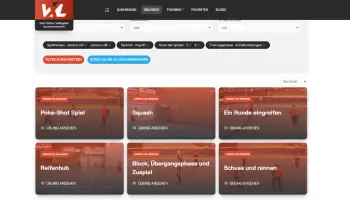
VolleyballXL has a large database of volleyball drills for different skills, positions and training goals. Below, we have selected a group of exercises that focus specifically on serving and serving technique. These exercises are ideal for integrating the underhand serve, allowing beginners to work on consistent ball contact, serving direction and accuracy while gradually progressing toward more game-like serving situations.

Service stroke

  • U12
  • U18
  • Serveren

Goal of the drill:
Training the technique of hitting the serve

Explanation of the drill:
This drill focuses on extending the arm towards the ball. The higher and more forcefully you hit the ball, the flatter your serve will cross the net. Position one player on a bench and, by holding the ball up, measure the maximum height the server can reach with an extended arm. Remember this height. The server then throws the ball cleanly towards the player on the bench, who catches it and holds it at the measured height. During this time, the server can refine their arm movement, focusing on pulling the elbows back and other techniques you wish to emphasize as a coach.

Set the net to its highest position or have players serve against a mat to minimize the need for retrieving balls. The objective here is to maximize serving practice, not to spend time chasing balls.

Watch drill

Serve ditto

  • U12
  • U18
  • Serveren

Goal of the drill:
Improve the targeted impact on a specific position in the field

Explanation of the drill:
Form groups of four at the baseline on both sides of the court.

1: Players serve consecutively, targeting the same half of the court as their predecessor. The first player in each group chooses the target position for the serve.

2: If any player fails to serve the ball into the designated half, the group must restart from the first player.

Trainer Tips:

Monitor the proper technique of the serve and observe if any player is struggling. For younger players, practice underhand serving on a smaller court.

V1: For younger players, consider dividing the court into north/south or east/west sections.

Watch drill

Serve against the wall

  • U12
  • U6
  • Serveren

Goal of the drill:
Improve the impact from the bottom

Explanation of the drill:
Each player has one ball. The players spread out 1-2 meters from the wall and hit the ball against it from below.

Watch drill

Serve relay

  • U12
  • U18
  • Serveren

Goal of the drill:
Improve serve under pressure by running, spinning and serving within 5 counts.

Explanation of the drill:
1. The first player in each group picks up a ball, runs to the baseline, turns around, and serves within five seconds.

2. The same player then runs back to the 3-meter line, receives a ball from a teammate, and returns to the baseline to serve again. This process is repeated for the third ball.

3. Subsequently, the second player in the group follows the same procedure: running, serving, and repeating the actions. Each player must execute three correct serves. PLEASE NOTE: If a serve lands in the net or out of bounds, the player must repeat the serve.

Tips: Encourage players to sprint at full speed. Players should not throw the ball to each other; instead, they must collect it at the 3-meter line. Position the minis closer together and instruct them to perform underhand serves.

V1: As a coach, specify which court area the players should target when passing the ball.

Watch drill

Tic Tac Toe

  • U12
  • U18
  • Serveren

Goal of the drill:
Targeting specific areas of the field.

Explanation of the drill:
Groups of three are formed on both baselines, and nine zones are marked on the court.

1. The first player from each group serves simultaneously into a designated zone, following the coach’s signal.

2. The subsequent server must target a zone that enables the third server to achieve three consecutive points in a tic-tac-toe pattern.

Coaches’ Tips:

Focus on the proper technique of the serve and monitor if the server shows signs of fatigue. Younger players, or “Minis,” can practice underhand serving on a smaller court.

V1: Organize the activity into three rounds.

V2: Position players to challenge the serve and improve reception skills.

V3: Direct players to target only diagonal lines with their hits.

Watch drill

When should players move to an overhand serve?

The underhand serve is a useful learning technique, but it does not need to be the final serving technique for most players.

A player may be ready to begin learning an overhand serve when they can consistently:

  • serve the ball over the net from the required distance;
  • control the basic direction of the serve;
  • coordinate a step with the serving arm;
  • make consistent contact with the ball;
  • produce enough strength and coordination for an overhead contact.

Coaches do not always need to wait until the underhand serve is perfect before introducing overhand serving. Both techniques can be practiced during the same development period, especially when players are beginning to develop the strength and coordination required for a higher contact point.

Underhand Serve FAQ

What is an underhand serve in volleyball?

An underhand serve is a serving technique where the player holds the ball around waist height and strikes it from below with the opposite hand to send it over the net.

How do you underhand serve a volleyball?

Stand with the opposite foot forward, hold the ball around waist height, swing the serving arm from behind the body, step forward and make firm contact with the lower-back part of the ball.

Should you use a fist or open hand for an underhand serve?

Both can be used when learning the technique. The most important factor is creating a firm and consistent contact surface. Beginners can experiment with a closed fist or firm open hand to find the contact that gives them the most control.

How can I make my underhand serve go farther?

Use your whole body instead of only your arm. Step toward the court, transfer your weight forward, keep the arm swing relaxed and make firm contact slightly in front of your body.

Is the underhand serve good for beginners?

Yes. The underhand serve is often easier for beginners because the ball does not need to be tossed overhead and the contact point is lower and easier to control.

How do you make an underhand serve more accurate?

Keep the starting position and ball contact consistent, step directly toward your target and let the serving arm swing in the same direction you want the ball to travel.

Improve your underhand serve

A reliable underhand serve starts with simple and repeatable technique. Keep the ball stable, use a relaxed arm swing, transfer your weight forward and make firm contact with the lower-back part of the ball.

Once you can consistently serve over the net, begin focusing on placement. Practice serving toward different court zones and gradually add competitive situations so the technique also remains stable under pressure.

Continue developing your serve with our volleyball serving guide, float serve guide, topspin serve guide and our collection of volleyball serving drills.

Want to build more confident and consistent servers?

Use VolleyballXL to find practical serving drills, coaching tips and complete training ideas for every level.

myrthe stefan