U12 Volleyball around the world: 17 youth systems explained

10/13/2026 |

Imagine two 11-year-old volleyball players living on opposite sides of the world.

One plays 2v2, with rules that allow catching and throwing. Another plays 4v4, where players are learning to organize an attack using three contacts. A third might already compete in a six-player team.

All three are learning volleyball. But the games they play can look remarkably different.

Across the world, national volleyball federations have developed their own approaches to introducing children to the sport. Some organize youth volleyball around progressive skill levels. Others gradually increase the number of players on the court. Some allow adapted ball contacts, while others introduce more traditional competition formats at an early age.

In this article, we explore 17 countries and their youth volleyball systems, comparing team sizes, technical development, court dimensions, equipment, rules and competition formats.

Is U12 volleyball the same everywhere?

There is no single international U12 volleyball format.

The term U12 generally refers to players under a certain age, but the exact age categories and competition structures differ between countries.

For example, France uses categories such as M11 and M13. Poland has separate U11, U12, U13 and U14 mini-volleyball competitions. Other countries organize their youngest players primarily by skill level rather than age.

Another important distinction is that a country’s introductory volleyball program is not necessarily identical to its official competition format.

A federation may offer beginner programs with catching and throwing, while regional competitions use more traditional volleyball rules.

These differences are particularly relevant for youth coaches who need to select appropriate ejercicios de voleibol para jóvenes for the playing format used by their team.

U12 volleyball systems in 17 countries

The following table provides an overview of introductory programs and youth competition formats used around the world.

PaísProgramPlaying format
🇳🇱 NetherlandsSub-12 (minivoley)2v2 → 3v3 · Five levels
🇮🇹 ItalyVolley S3White 2v2 · Green 3v3 · Red 4v4
🇩🇪 GermanyMini-volleyball (NRW)U12 2v2 · U13 3v3 · U14 4v4
🇫🇷 FranceM11 / M13M11 2v2 · M13 4v4
🏴󠁧󠁢󠁥󠁮󠁧󠁿 EnglandVolley2s2v2 · Four progressive stages
🇩🇰 DenmarkKidsvolleyLevels 0–4 · 4v4 from Level 3
🇸🇪 SwedenKidsvolley / 4 mot 4Levels 1–3 → 4v4 in Levels 4–7
🇳🇴 NorwayMinivóleyFive levels · Grouped by skill, not age
🇫🇮 FinlandMini-volleyballU9 / U11 / U13 · Triple Ball
🇵🇱 PolandMinisiatkówkaU11 1v1 · U12 2v2 · U13 3v3 · U14 4v4
🇪🇸 SpainMinivóleyBenjamín and Alevín · 4v4
🇨🇦 CanadaSmashball / Tripleball3v3 Smashball · Three-rally Tripleball
🇺🇸 United StatesVoleibol juvenilAdapted 1v1 to 4v4 · 6v6 in clubs
🇧🇷 BrazilVivaVôlei / Minivôlei4v4 · 12 × 5 m court
🇯🇵 JapanElementary school volleyballModified 6v6
🇦🇺 AustraliaPlayVolleyFlexible small-sided games
🇳🇿 New ZealandKiwiVolleyRotate · Rally · Spike
Introductory programs and youth competition formats in 17 countries.

These are representative federation programs and competition formats. They do not necessarily represent every club or regional competition within a country. Local regulations and age eligibility may differ.

Netherlands: Volley Stars

The Netherlands introduced Sub-12 (minivoley) as the successor to Cool Moves Volley (CMV), the country’s former introductory youth volleyball system.

Developed by the Dutch volleyball federation, Nevobo, Volley Stars is designed for children aged approximately 6–12 and consists of five progressive levels.

The five levels of Volley Stars

  • Level 1 – Catch Volley: Children play 2v2. They catch the ball and throw it directly over the net. The game develops movement, coordination and the ability to judge the ball’s trajectory.
  • Level 2 – Bounce Volley: Still 2v2. Players catch the ball and use a bounce-set to create an attacking opportunity for their teammate.
  • Level 3 – Pass Volley: Players begin using a technical volleyball pass as the first contact. Catching is still permitted during the following action.
  • Level 4 – Smash Volley: Team size increases to 3v3. Serving is introduced, the first contact is a volleyball pass and the second contact can be caught before a set is played.
  • Level 5 – Ultimate Volley: Teams continue playing 3v3, but catching is no longer allowed. A team receives a bonus point when it successfully uses three contacts to return the ball.

The levels also introduce changes in court dimensions, net heights, ball weights and scoring.

For example, the Level 4 rules card specifies a court 5.20 meters wide and 4.50 meters deep, while Level 5 expands to 6 × 6 meters per side. Both levels use a 2.00-meter net.

The system introduces familiar volleyball techniques progressively. Coaches can connect these stages with ejercicios de recepción, controlled attacking exercises and small-sided games.

Italy: Volley S3

Italy’s Volley S3 introduces young children to volleyball through three progressive levels: White, Green and Red.

Following a season of review and reorganization in 2025–2026, FIPAV’s current guidelines organize the levels as follows:

Nivel Approximate age Playing format
White 5–7 years 2v2
Green 7–9 years 3v3
Red 9–11 years 4v4

Each level introduces more volleyball-specific movements and technical requirements.

One distinctive feature is the separation between two complementary game concepts, which are used at every level.

Gioco Volley starts from the serve. It introduces the first phase of a rally: serving, receiving and building an attack.

Gioco Spike starts from the attack. It introduces attacking, blocking, defending and counterattacking.

Passing and setting are integrated into both types of games.

Alongside Volley S3, FIPAV’s regional and provincial committees organize youth competitions. These competition formats are not necessarily identical to the S3 introductory levels, so coaches should check the rules used in their own region.

Canada: Smashball and Tripleball

Canada has developed two particularly distinctive formats: Smashball y Tripleball.

Smashball: five progressive levels

Smashball is Volleyball Canada’s introductory game for children aged approximately 6–12. It introduces volleyball through five levels that gradually replace catching and tossing with technical volleyball contacts.

Smashball is played 3v3, with one extra player per team rotating in. The game is played on badminton courts (or a small volleyball court), with a badminton or other low net and light volleyballs.

One bounce is allowed.

The learning progression moves through five levels:

  • Level 1: Catch the ball, move to the net and spike.
  • Level 2: Catch, toss-pass to a teammate, toss-set, then spike.
  • Level 3: Catch and toss-pass, followed by a technical volley set and a spike.
  • Level 4: A technical forearm pass is introduced, while the set is still caught and tossed before the spike.
  • Level 5: Modified volleyball, combining the skills learned in the earlier levels.

The game is built around creating an attacking contact from the very first level. This can be connected with ejercicios de ataque en voleibol adapted to the players’ technical abilities.

Tripleball: three rallies in one sequence

Tripleball changes the way points are introduced during a match.

Instead of relying exclusively on serving, a sequence consists of three separate rallies.

  1. Rally 1: A player serves, and the rally is played normally.
  2. Rally 2: A ball is tossed to the team that received the original serve.
  3. Rally 3: A ball is tossed to the team that served the original rally.

Each rally is worth one point. After the three-ball sequence, service rotates between the teams.

This gives both teams additional opportunities to organize an attack rather than having every rally begin with a serve.

Tripleball is widely used in Canadian youth and school competitions. Provincial associations, such as Volleyball Alberta, Saskatchewan Volleyball and Volleyball Manitoba, publish their own Tripleball rules, so details such as team size and how the tossed ball must be played can differ by province and age group.

Denmark: Kidsvolley

Denmark uses Kidsvolley, a system consisting of five levels numbered 0 through 4.

Children begin with basic ball handling, catching and throwing before progressively introducing volleyball techniques.

Level 0 focuses on movement, throwing and catching. Level 1 introduces the underhand serve as the first volleyball technique. Level 2 combines throwing movements with volleyball contacts, introducing forearm and overhead passing on the first contact and a standing attack.

The three-contact rule at level 3

One particularly distinctive feature appears at Level 3, where teams are required to use three contacts before sending the ball over the net.

  1. The first contact must be a volleyball contact.
  2. The second contact is caught and thrown on to a teammate in one fluid movement.
  3. The third contact must be a volleyball action that sends the ball over the net.

This means the second contact is deliberately modified, even while the first and third contacts follow more conventional volleyball technique.

Level 3 is played with four players per team on the court, using a badminton court and a 1.95-meter net.

At Level 4, catching is removed and children use regular volleyball contacts, with up to three team touches.

For coaches working with this format, Colocacion and pass-set-attack combinations are particularly relevant training categories.

Sweden: Kidsvolley and 4 mot 4

Sweden uses Kidsvolley for its first three levels, followed by a modified 4v4 format called 4 mot 4.

The 4v4 system consists of Levels 4–7 and is intended primarily for children and young teenagers aged approximately 10–14. Boys and girls can play both with and against each other.

Some rules apply to all four levels:

  • A team consists of three to seven players, with four (or three) on the court.
  • Players follow a fixed rotation order. The player who served most recently is the back-row player and may not attack at the net or block.
  • After four serves by the same player, the team rotates in a new server.

The levels then gradually modify the game.

  • Level 4: Three team contacts are required. The second contact may be caught and thrown as a pass to a teammate. One bounce is permitted, except when receiving a serve. The net is 2.00 meters and a youth ball of 200–230 grams is used.
  • Level 5: One bounce is still allowed, except on serve reception. The net remains at 2.00 meters and a youth ball of 200–240 grams is used.
  • Level 6: The net rises to 2.10 meters. A bounce is still allowed, except on serve reception or when the ball comes straight back from the opponent’s block. All serves are taken from behind the end line.
  • Level 7: The bounce allowance disappears, a senior ball is used and net heights move closer to traditional youth volleyball.

Norway: Minivolleyball

Norway’s Minivóley is designed for young players and is played in small teams on smaller courts.

A defining feature is that teams are grouped according to skill level rather than by age.

The system consists of five levels:

  • Mini 1: Catching and throwing are permitted for all three contacts.
  • Mini 2: Catching is permitted for the first two contacts. The third must be a volleyball contact over the net.
  • Mini 3: Catching is permitted only on the second contact.
  • Mini 4: Catching is removed. Teams must use at least two contacts before returning the ball.
  • Mini 5: Played like Mini 4, for players who have been playing without catching for some time.

Norwegian mini-volleyball tournaments usually last two to three hours, with teams typically playing around four short, timed matches.

The playing format and rules change as children develop their skills.

Poland: Minisiatkówka

Poland’s Minisiatkówka uses a particularly clear progression in team size across four youth competition categories.

Category Formato Polish name
U11 1v1 Único
Sub-12 2v2 Dwójki
U13 3v3 Trójki
U14 4v4 Czwórki

This structure is used in the national KINDER Joy of Moving mini-volleyball championships, for both girls and boys.

The competition pathway runs from local and regional stages during the school year to the national final, the Wielki Finał, in summer.

The progression provides a clear connection between age category and team size.

Coaches working in these formats can use Ejercicios de voleibol para grupos reducidos to organize training activities for pairs, groups of three and groups of four.

Germany: Mini-volleyball

In Germany, youth competitions are organized by the regional volleyball associations (Landesverbände), so the exact formats can differ between regions.

The Westdeutscher Volleyball-Verband (WVV) in North Rhine-Westphalia offers a clear example of an age-related progression in team size:

  • U12: 2v2, on a court with two halves of 4.50 × 4.50 meters.
  • U13: 3v3, on a 12 × 6-meter court.
  • U14: 4v4, on a 14 × 7-meter court.

For the 2026–2027 season, the WVV’s U12 structure includes two categories:

  • Volley Cool: Introductory U12 tournaments in which the second contact may be caught. The first contact must be a volleyball contact.
  • Volley Pro: U12 tournaments with regular volleyball techniques. The qualification tournaments and the West German championship are played in this format.

Both are played 2v2, but the permitted ball contacts differ.

France: M11 and M13

France organizes young players into age categories such as M11 and M13.

At the national competition level, the Coupe de France M11 uses 2v2, while the Coupe de France M13 uses 4v4.

These competitions follow age-specific regulations covering team composition, substitutions and match organization.

For example, the M11 national finals limit each player to a maximum of three consecutive serves.

Regional youth festivals and introductory activities may use additional adaptations.

England: Volley2s

Volleyball England’s Volley2s is an introductory format designed for children aged approximately 7–11.

It is played 2v2 and has four developmental stages:

  • Red: A simple catch-and-throw game emphasizing three contacts.
  • Amber: Introduces serving, the overhead volley set and attacking with a volley, spike or tip.
  • Green: Introduces receiving with a dig or volley, followed by a set and an attack.
  • Gold: Moves towards continuous volleyball, with a serve and at least two contacts before the ball goes back over the net.

The program also includes movement, problem-solving, cooperation and social skills.

Volley2s is the first stage of Volleyball England’s Let’s Play Volleyball pathway, which continues with Volley3s (3v3, from around age 11) and Volley4s (4v4, around ages 14–16).

The small courts and adapted equipment make it suitable for schools, clubs and introductory volleyball sessions.

Japan: Elementary school volleyball

Japan provides an interesting example of organized six-player volleyball at elementary school level.

The All Japan Elementary School Volleyball Championship uses 6v6, following the six-player volleyball regulations with additional rules for elementary school players.

Competition matches are played as best-of-three sets, and players use a lightweight size 4 volleyball.

The national championship includes boys’, girls’ and mixed-team competitions.

This describes Japan’s national elementary school competition, rather than every introductory volleyball activity used in schools or clubs.

Other youth volleyball systems around the world

Spain: Minivóley

Spain uses the youth categories Benjamín and Alevín, with adapted mini-volleyball formats.

The official RFEVB rules for both categories specify four players per team on the court.

Matches are played on a court measuring 12 × 6 meters in total, with two halves of 6 × 6 meters.

The net is 2.10 meters for Alevín and 1.90 meters for Benjamín, and a lighter ball is used. Regional federations and school programs can use their own adaptations for younger children.

Finland: Mini-volleyball and Tripla Pallo

Finland organizes mini-volleyball through U9, U11 and U13 age categories. U9 is always played 2v2.

Under the 2025–2026 rules, the federation introduced Tripla Pallo (Triple Ball) as a 3v3 format in the U11 and U13 development series, the Tiikerisarja.

These competitions use a three-ball sequence consisting of a serve followed by two introduced balls, one to each team. Regions can choose between different variants of the format.

The U13 rules are now written primarily for 3v3 on a badminton doubles court, although 4v4 and 6v6 are still described.

Brazil: VivaVôlei and Minivôlei

The Brazilian Volleyball Confederation’s VivaVôlei program introduces children to volleyball through mini-volleyball.

A regular volleyball court is divided into three mini-volleyball courts. Each game is played between two teams of four players on a reduced court measuring 12 × 5 meters.

Players take turns serving and rotate after each point won. A lower net and lighter ball are used.

United States: Flexible youth volleyball

USA Volleyball publishes simplified youth rules for children aged approximately 3–11.

These rules allow teams of two, three or four players per side, and they can also be used for 1v1 play.

They include:

  • Smaller courts and lighter volleyballs.
  • Lower nets, from about five to six feet for the youngest players to seven feet for 12 and under.
  • Serving from the end line of the smaller court.
  • Unlimited substitutions, with players circulating in and out of the game.
  • A maximum of three to five consecutive serves before the serve passes on.

These introductory adaptations exist alongside traditional youth club competitions, which use 6v6.

Australia: PlayVolley and Spikezone

Volleyball Australia launched PlayVolley in 2026 as its junior grassroots participation program for children aged 5–12.

It replaces Spikezone, Volleyball Australia’s earlier entry-level program for junior players.

Introductory volleyball activities are adapted to suit different ages, skill levels and playing environments.

Junior competitions are run by the state associations, so the exact U12 playing structure can depend on the state and local program.

New Zealand: KiwiVolley

New Zealand’s KiwiVolley is Volleyball New Zealand’s modified game for children aged approximately 5–12.

The program uses three progressive formats, linked to school years:

  • KiwiVolley Rotate (around Year 3/4): Introduces basic movement, coordination and ball handling.
  • KiwiVolley Rally (around Year 5/6): Develops cooperative play and more regular volleyball contacts.
  • KiwiVolley Spike: For older primary and intermediate players, introducing more advanced skills and attacking opportunities.

The rules use modified equipment and playing regulations, such as a limit on the number of consecutive serves by one player.

Regional associations organize school and community competitions, so formats can vary locally.

What are the main differences between U12 volleyball systems?

Looking across these 17 countries, several important differences become visible.

Team size

Some countries introduce volleyball through 1v1 or 2v2 before progressing to 3v3 and 4v4. Others already organize 6v6 competitions for elementary school players.

Catching and throwing

In the Netherlands, Denmark, Sweden, Norway, Canada and England, as well as in regional formats such as Volley Cool in North Rhine-Westphalia, introductory formats include catching and throwing at certain levels.

These allowances change or disappear as players progress.

Bouncing

Some youth systems permit the ball to bounce once. Sweden uses this in Levels 4–6 of its 4v4 format, while Canada includes a bounce allowance in Smashball.

Three-contact rules

Several countries explicitly address how often a team should contact the ball.

Denmark requires three contacts at Kidsvolley Level 3. Sweden also requires them at 4v4 Level 4, while the Netherlands awards an additional point for successful three-contact play at Volley Stars Level 5. Norway takes a different approach at Mini 4, requiring at least two contacts.

Saque

Some introductory formats begin with throws or simplified serves. Other competitions use normal serving movements but restrict serving distance or the number of consecutive serves.

Coaches can select suitable Los ejercicios de saque consistentes depending on the rules their players use.

Courts and equipment

Smaller playing areas, lower nets and lighter volleyballs are common across many youth systems.

However, the exact dimensions and equipment vary by country and playing level.

Competition structure

Young players may participate in short tournaments, skill-based festivals, local leagues, regional championships or national finals.

Some systems organize teams mainly by age. Others emphasize the players’ current technical abilities.

These differences mean that two players described as U12 may have experience with very different versions of volleyball.

U12 volleyball drills for different playing formats

Whether your players compete in 2v2, 3v3, 4v4 or are preparing for 6v6, their training sessions should reflect the skills and playing situations they encounter.

A beginner working on catching, throwing and movement may need very different exercises from a player learning to organize a pass, set and attack.

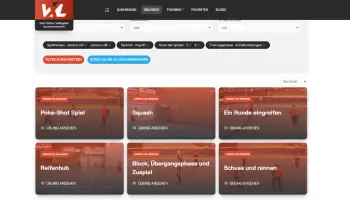
En VolleyballXL, we offer a collection of video-based U12 volleyball drills for different levels and training setups.

Coaches can find exercises covering:

  • Fundamental ball control and coordination.
  • Passing and overhead setting.
  • Serving and serve reception.
  • Attacking and movement.
  • Small-sided games for 2v2, 3v3 and 4v4 setups.
  • Communication, teamwork and game awareness.

You can explore our ejercicios de voleibol para jóvenes and adapt the exercises to your country’s rules and your players’ development level.

For coaches who are just getting started, our collection of los ejercicios de voleibol para principiantes provides additional ideas for introducing essential skills.

VolleyballXL also offers practice planning tools that allow coaches to build complete training sessions, select exercises and organize their preparation.

There are also ready-made sessions, including an example U12 training plan focusing on ball control, passing and serving.

Explore U12 volleyball drills on VolleyballXL

One sport, many ways to get started

From Volley Stars in the Netherlands and Volley S3 in Italy to Smashball in Canada and Minisiatkówka in Poland, countries have developed different ways to introduce young players to volleyball.

Some use progressive skill levels. Others increase the number of players according to age. Some allow catching and bouncing, while others organize traditional volleyball competitions at an early age.

These different systems are all part of the wider journey of introducing children to volleyball.

And because youth volleyball rules continue to develop, this article provides an overview of published programs and competition formats rather than one universal rulebook.

¿Cómo se organiza el voleibol sub-12 en tu país?

¿Tus jugadores más jóvenes compiten en partidos de 2 contra 2, 3 contra 3, 4 contra 4 o 6 contra 6? ¿Se les permite atrapar el balón o utilizan los toques tradicionales del voleibol desde el principio?

Nos encantaría saber qué sistema se utiliza en tu país.

Fuentes y lecturas recomendadas

Este artículo se basa en información publicada por las federaciones nacionales de voleibol, los organismos reguladores regionales y los reglamentos de las competiciones juveniles. Las fuentes incluyen materiales correspondientes a las temporadas 2025-2026 y 2026-2027, así como descripciones de los programas de las federaciones.

  1. Países Bajos – Nevobo: Volley Stars
  2. Italia – FIPAV: Guía práctica de voleibol S3
  3. Alemania – Federación de Voleibol de Alemania Occidental: Competición sub-12 y Reglamento de la categoría sub-12 2026-2027
  4. Francia – FFvolley: Reglamento de la competición M11 y Reglamento de la competición M13
  5. Inglaterra – Volleyball England: Juguemos al voleibol
  6. Dinamarca – Volleyball Danmark: Niveles 0–4 de Kidsvolley
  7. Suecia – Svensk Volleyboll: 4 contra 4, niveles 4–7
  8. Noruega – Norges Volleyballforbund: Minivoleibol
  9. Finlandia – Federación Finlandesa de Voleibol: Reglas del minivoleibol 2025-2026
  10. Polonia – Minisiatkówka: categorías de competición
  11. España – RFEVB: Reglamento oficial para las categorías Alevín y Benjamín
  12. Canadá – Volleyball Canada: Smashball; Volleyball Alberta: Reglas del Tripleball
  13. Estados Unidos – USA Volleyball: Reglas simplificadas para jóvenes
  14. Brasil – Confederación Brasileña de Voleibol: VivaVôlei Miniregras
  15. Japón – Asociación Japonesa de Voleibol: Campeonato de escuelas primarias de 2026
  16. Australia – Voleibol Australia: Pruébalo y PlayVolley
  17. Nueva Zelanda – Reglas y arbitraje de KiwiVolley (Volleyball Manawatu)

Última revisión: octubre de 2026. Las normas del voleibol juvenil pueden cambiar de una temporada a otra. Los entrenadores y los clubes deben consultar siempre las últimas normas publicadas por su federación o por el organizador de la competición regional.

Blogs populares