How to coach a volleyball team with mixed skill levels

10/20/2026 |

Every volleyball coach knows the situation. One player can hit almost any set, while another is still struggling to pass a float serve. Some players pick up new skills quickly, while others need more time and repetition.

Having different skill levels within one team is completely normal, whether you’re coaching youth, recreational or senior players. The challenge is making sure everyone keeps learning. If your practice is too easy, experienced players lose focus. If it’s too difficult, less experienced players can become frustrated.

The good news? You don’t need to prepare a completely different practice for every player. Often, a few small adjustments are enough to challenge everyone.

1. Look beyond the overall skill level

It’s easy to label players as strong or weak, but volleyball skills aren’t that simple. Your best attacker might struggle with serve receive, while a less experienced player could have the most consistent serve on the team.

Instead of judging players by their overall level, look at individual skills. Consider how comfortable each player is with serving, passing, setting, attacking, blocking and defending.

A simple overview can help. Rate each skill roughly from 1 to 3, not to rank your players, but to identify where they need more support or a greater challenge. You might discover that players who seem far apart in overall ability are actually quite similar in specific areas.

This also makes it easier to create balanced groups and set realistic individual goals. If you’re not sure where to start, our guide on how to set effective volleyball training goals explains how to turn what you observe during matches and practices into clear learning objectives.

2. Know when to split players by level

Should you separate stronger and less experienced players during practice? Sometimes. But not always.

Grouping players with similar abilities can be useful when working on specific techniques. For example, during serve receive practice, beginners might receive controlled serves from a coach while experienced passers work against more difficult serves.

You can also divide the court into smaller areas or use different stations. Everyone works on the same skill, but the difficulty matches their current ability.

However, keeping players together is just as important. Volleyball is a team sport, and players need to learn how to communicate, adapt and support teammates with different strengths. Mixed-level groups can be especially valuable during game-like exercises where players depend on each other.

Coaching tip: Change your groups regularly. If the same players are always placed in the lower-level group, they will notice. Group players based on the purpose of the drill rather than giving them permanent labels.

VolleyballXL 191 e1737535947790

3. Adapt your volleyball drills using STEP

One of the easiest ways to manage different skill levels is to adjust the drill instead of changing it completely.

The STEP framework gives you four ways to do this: Space, Task, Equipment and People.

Space

Change the size of the playing area or target. A smaller area to defend can make a defensive task more manageable, while a smaller attacking target can demand greater precision. The right adjustment depends on what you’re trying to teach.

Task

Give players different challenges within the same drill. A beginner might focus on controlling a pass towards the setter, while an experienced player aims to pass consistently into a smaller target area.

Equipment

Use different equipment when it supports the learning goal. A lighter ball can help younger players develop confidence, while targets or marked zones can add a precision challenge for experienced players.

People

Change the number of players, their roles or the way you form groups. Sometimes players benefit from practising with teammates at a similar level. At other times, mixed groups create valuable learning opportunities.

Example: During a serve receive drill, less experienced players receive controlled serves while advanced players face more challenging serves. Both groups practise the same skill, but each player works at an appropriate difficulty. You can find inspiration for different variations in our collection of volleyball passing drills.

Remember that making a drill more complicated doesn’t automatically make it better. The challenge should always help players improve the skill you’re training.

4. Use scoring rules to challenge everyone

Small changes to scoring can completely change the way players approach a game.

Imagine you’re playing 4v4. One attacker is already comfortable hitting into open spaces, while another is still learning to approach and contact the ball consistently.

Instead of giving both players exactly the same objective, create individual challenges. The experienced attacker earns a bonus point for scoring in a specific zone. The developing attacker earns a bonus for using a controlled, full attacking approach.

You can do the same with passing, serving or setting. One player works towards a consistent pass to target, while another aims for greater precision against difficult serves.

This way, players can work towards different goals while taking part in the same game. You can apply these scoring variations to many of the exercises in our team volleyball drills collection.

Coaching tip: Avoid automatically awarding more points to the weakest players. Individual challenges are often more motivating because every player has something to work towards, regardless of their current level.

5. Give every player enough ball contacts

One of the biggest problems in mixed-level teams isn’t necessarily the difference in ability. It’s the difference in involvement.

In a 6v6 game, experienced players may take responsibility for most of the difficult balls. Less confident players can end up watching rather than participating. And without enough meaningful ball contacts, improvement becomes difficult.

Smaller-sided games can help solve this problem.

In 2v2, 3v3 or 4v4, players generally have more opportunities to pass, set, attack and make decisions. They also have more responsibility, because there are fewer teammates to rely on.

For example, try playing 3v3 on a smaller court. Give each player an individual focus, such as improving first contact, making a good setting decision or attacking an open space.

The game remains competitive, but everyone gets more opportunities to practise. Looking for suitable exercises? Explore our volleyball drills for small groups for practical 2-player, 3-player and 4-player exercises.

Coaching tip: Don’t just count successful actions. Pay attention to how often each player gets involved and whether those contacts help them develop.

VolleyballXL 96 e1737122885909

6. Keep your experienced players challenged

It’s tempting to focus most of your attention on the players who struggle. After all, your experienced players seem to manage just fine.

But they also need appropriate challenges to keep improving.

Instead of adding random extra tasks, increase the difficulty within realistic volleyball situations. Let advanced passers receive tougher serves, ask experienced setters to make decisions from out-of-system passes, or challenge attackers to find solutions against a well-positioned block.

You can also encourage experienced players to support their teammates. A quick piece of feedback or a demonstration can be useful for both players.

Just make sure your strongest players don’t become permanent assistant coaches. They need opportunities to practise, make mistakes and develop their own skills too.

7. Create a team environment where everyone can improve

Level differences aren’t only a technical challenge. They can also affect the atmosphere within your team.

A frustrated reaction after a missed pass, a stronger player taking every ball or a teammate who stops asking for the set can quickly affect confidence.

As a coach, you set the standard for how players respond to mistakes and support each other.

Make sure players understand that everyone is working on something different. For one player, success might be attacking past a strong block. For another, it might be making three controlled passes in a row.

Recognise both.

You should also think carefully about matchups. Repeatedly putting your least experienced defender against your strongest attacker may create more frustration than learning. Adjust the challenge so both players have a realistic opportunity to succeed.

One fun option is a modified King of the Court game. The challenging team needs to win one rally to take the court, while the reigning team must win two rallies in a row to stay. This gives challengers an advantage while asking the reigning team to perform consistently.

Most importantly, encourage players to focus on progress rather than comparing themselves with teammates.

8. Plan practices that challenge every player

Managing different skill levels doesn’t mean preparing separate training sessions for every player. It means thinking about how you can make the same exercise valuable for everyone.

Before your next practice, ask yourself three questions:

  • What should every player learn from this drill?
  • How can I make it easier or more challenging without changing the main objective?
  • Will every player get enough meaningful ball contacts?

Sometimes the solution is a smaller court. Sometimes it’s a different scoring rule, a more challenging serve or a change in group size.

Having a clear structure also makes these adjustments easier. If you want to prepare more efficiently, read our guide on how to prepare a complete volleyball training session in 10 minutes.

How VolleyballXL helps coaches deal with different skill levels

Finding exercises that challenge everyone can take time, especially when your team includes players with different abilities and learning speeds.

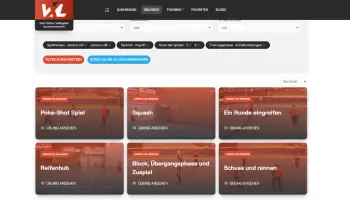
With VolleyballXL’s volleyball drills library, you can explore video exercises for different skills, age groups and levels. Instead of creating every drill from scratch, you can find inspiration and adjust the difficulty to match your players.

Using the VolleyballXL practice planning tools, you can combine suitable drills into a structured training session or generate a practice based on your team’s needs.

Curious how other coaches handle this challenge? Watch how the coaches at USV Protos use VolleyballXL to deal with level differences, introduce more variation and prepare engaging practices.

Remember: the goal isn’t to make practice equally difficult for everyone. It’s to make sure every player is challenged at the right level and gets the opportunity to improve.

Populair blogs