Roll Shot in Volleyball: Technique, Tips and Drills

A roll shot in volleyball is a controlled attacking shot that combines an attacking arm swing with an open-hand contact and topspin. Instead of hitting the ball with maximum power, the attacker places the ball into open space in the defense.

A good roll shot can be difficult to defend because the attacker initially looks like they are preparing for a normal spike. Only at the moment of contact does the attacker reduce the power and use control and placement instead.

This guide explains what a volleyball roll shot is, how to perform the technique, when to use it, where to aim, which mistakes to avoid, and how coaches can train roll shots during volleyball practice.

https://livid.com/watch/n25o4M8KzbNk

To develop your complete attack, also explore our guides to volleyball spiking, the volleyball approach, and our library of volleyball spiking drills.

What is a roll shot in volleyball?

A roll shot is a controlled volleyball attack in which the player uses an open hand to contact the ball and creates topspin by brushing over it. The purpose is to place the ball into an open part of the court rather than overpower the defense.

The technique usually begins with a normal volleyball approach. The attacker jumps and prepares the arm as if they are going to spike. This makes the roll shot harder for defenders to anticipate.

The most important characteristics of a roll shot are control, disguise, topspin and placement. A roll shot should still be an attacking action. It should not simply become an easy ball for the opponent.

Roll shot vs tip vs spike

A roll shot is often confused with a tip because both techniques use less power than a normal spike. The main difference is how the ball is contacted and how the attacker uses the arm swing.

TechniqueBall contactPowerMain goal
SpikeFirm full-hand contactHighBeat the defense with speed and power
Roll shotOpen hand with brushing contact and topspinMedium to lowAttack open space with control and placement
TipSoft controlled contactLowDrop the ball behind or around the block

The advantage of the roll shot is that the attacker can use almost the same preparation as for a hard spike. This makes it possible to keep the defense guessing until late in the attacking action.

How to hit a roll shot in volleyball

A good volleyball roll shot starts before the player touches the ball. The approach, jump and arm preparation should make the defender believe that a hard attack is still possible.

  1. Use your normal approach: approach the ball with the same rhythm and footwork you would use for a normal spike.
  2. Jump aggressively: avoid slowing down simply because you already intend to play a softer shot.
  3. Keep your hitting arm ready: prepare the arm as if you could still hit the ball hard.
  4. Contact the ball high: a high contact point gives you more control and more possible attacking angles.
  5. Use an open hand: contact the ball with the full hand rather than poking at it.
  6. Brush over the ball: move the hand over the back and top of the ball to create topspin.
  7. Aim at open space: use information from the block and backcourt defense to choose the target.
  8. Finish the arm swing: keep the movement natural after contact so the shot remains controlled and disguised.

Want to help attackers develop better shot selection?

Use VolleyballXL to find attacking drills, spiking exercises and complete training inspiration.

myrthe stefan

Roll shot contact and topspin

Ball contact is what separates an effective roll shot from a soft free ball. The player should contact the ball with an open hand and use a brushing movement to create forward rotation.

Instead of hitting directly through the middle of the ball with maximum force, the hand travels across the back and upper part of the ball. This creates topspin, which helps the ball move forward and then drop into the court.

The attacker should still contact the ball at a high point. Reaching high allows the player to hit over the block, change direction and attack deeper areas of the court.

Technical elementWhat to focus onCommon problem
ApproachUse normal attacking speed and rhythmSlowing down reveals the soft shot
Contact pointReach high and slightly in frontLow contact limits placement options
HandOpen and controlledA weak or loose contact creates an easy ball
TopspinBrush over the back and top of the ballNo spin can make the ball float long
Follow-throughKeep the arm movement naturalStopping the arm makes the shot predictable

When should you use a roll shot?

The roll shot is most useful when the attacker makes the decision based on the situation. It should be one option within a wider attacking toolbox that also includes hard spikes, tips and shots off the block.

  • When the block is well formed: play the ball over or around the block instead of forcing a hard attack into it.
  • When defenders are positioned deep: use a shorter roll shot into the space in front of them.
  • When defenders move forward: place a deeper roll shot toward the end line or deep corner.
  • When the set is off the net: a controlled attack may be more effective than trying to generate maximum power.
  • When you see an open seam: attack the space between two defenders and force them to communicate.
  • When you want to change the attacking rhythm: mixing hard and controlled shots makes the attacker less predictable.

Where should you aim a roll shot?

The best target for a roll shot depends on the position of the block and defenders. Attackers should learn to understand the volleyball court zones and recognize which spaces are not being defended.

TargetWhen it can be effectiveWhat the attacker should look for
Deep zone 1Right-back defender moves forwardOpen space near the end line
Deep zone 5Cross-court defender is too shallowSpace behind the defender
Behind the blockBackcourt defense starts deepShort uncovered space
Middle of the courtDefenders spread toward the sidelinesOpen central area
Between defendersTwo defenders have overlapping responsibilitiesA seam that creates hesitation
Open line or angleThe block takes away only one attacking directionThe space left outside the block

The key is not to aim at the same area every time. An attacker who always plays the roll shot short becomes easy to defend. Players should learn both short and deep placement.

Reading the defense before a roll shot

Advanced roll shots depend on reading the defense. Instead of deciding on the shot too early, the attacker should collect information during the approach and jump.

The attacker can look at the position of the block, the depth of the defenders and the spaces between them. If the line defender moves inside, the line may become available. If the cross-court defender drops very deep, a short roll shot may become the better option.

This makes the roll shot a decision-making skill as much as a technical skill. The attacker needs good ball control, but also the ability to recognize what the defense is giving them.

Common roll shot mistakes

Many roll shot problems come from making the shot too obvious or focusing so much on hitting softly that the player loses normal attacking technique.

  • Slowing down the approach: defenders can recognize the roll shot too early. Keep the approach similar to a normal spike.
  • Contacting underneath the ball: this often sends the ball too high or too deep. Contact higher on the back of the ball and brush over it.
  • Using no topspin: a ball without enough forward rotation can become an easy defensive ball.
  • Always aiming behind the block: defenders will move forward once they recognize the pattern. Train short and deep placement.
  • Stopping the arm swing: this makes the attack easy to read. Keep the attacking movement natural.
  • Deciding too early: players who decide on the target before reading the defense miss opportunities elsewhere on the court.

How to teach the roll shot

Coaches can teach the roll shot progressively. Begin with ball control and contact before introducing a full approach, blockers and defenders.

  1. Start with standing contact: let players practice brushing over the ball with an open hand.
  2. Add a self-toss: players toss the ball and direct controlled roll shots into selected areas.
  3. Add the attacking approach: use normal attack footwork and jump mechanics.
  4. Add target zones: use cones, hoops or mats to develop placement.
  5. Add a defender: the attacker now has to recognize where the open space is.
  6. Add a blocker: teach the attacker to recognize the space over, beside and behind the block.
  7. Add shot selection: allow the player to choose between a hard spike, tip and roll shot.

The final stage should look like a real volleyball situation. Players should no longer be told to play a roll shot. They should recognize when the roll shot is the best attacking solution.

Roll shot drills

Roll shot drills should progress from technique to decision-making. Repeating the contact is useful at first, but players eventually need a block or defense to read.

DrillHow it worksMain focus
Roll shot target drillAttackers play roll shots toward selected hoops, cones or matsPlacement and ball control
Short vs deep roll shotThe coach calls short or deep before the setChanging depth
Read the defenderA defender changes position before the attackReading open space
Spike or rollThe attacker chooses a hard spike or roll shot based on the defenseShot selection
Attack the seamTwo defenders create changing gaps between themRecognizing seams
Live attack gameAttackers score bonus points for controlled attacks into open zonesGame-like decision-making

When training roll shots, avoid rewarding the technique simply because the player used it. Reward the player when the shot was the correct choice and was placed into useful space.

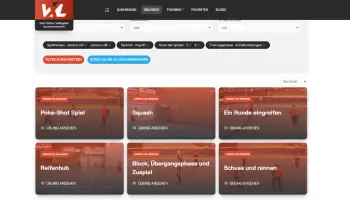
VolleyballXL has a large database of volleyball drills for different skills, positions and training goals. Below, we have selected a group of exercises that focus on attacking technique and hitting. These drills are ideal for integrating the roll shot, allowing players to practice the technique within realistic attacking situations while also working on their approach, arm swing, ball contact and shot selection.

Shot!

  • U18
  • Seniors
  • Aanvallen

Goal of the drill:
Learning to place an attack and improve roll shot technique

Explanation of the drill:
The player passes and sets the ball for themselves, then attempts to place the ball diagonally to the other player using a roll shot. If there are more than two players, switch positions after each action. With six or more players, have the player who attacked rotate to the opposite side.

Watch drill

Mat 1

  • U12
  • U18
  • Aanvallen

Goal of the drill:
Train stem step motion sequence

Explanation of the drill:
Stand an arm’s length from the mat. For right-handers, begin with a small left step just in front of the mat. Follow with a large, quick step across the mat, then perform a side step and jump. Repeat this drill several times.

Watch drill

2 vs 2: receive-attack on position 5-6, defend on position 5 or 6

  • U18
  • Seniors
  • Onderarms
  • Aanvallen

Goal of the drill:
Training receive-attack on position 5-6, defend on position 5 or 6

Explanation of the drill:
The backcourt is divided into three zones. Team B has passers in positions 5 and 6. Position 1 does not participate in the play.

Team A has a setter (Str) at the net and a server (S).
Player S serves to one of the passers on team B (P5 or P6).
After the serve, player S selects a defensive position in the backcourt: V5 or V6.

The passer who does not receive the serve moves to the net and sets the ball on the 3-meter line to position A6. The passer who did receive the serve attacks toward the defensive position (V5 or V6) chosen by player S. If player S defends successfully, they receive a set from the setter (Str) on the 3-meter line and attack against player P5 or P6. The rally is played out. Team A becomes team B, team B becomes team R, and team R becomes team A.

Variation: King of the Court (court B).

Watch drill

Smash Volley

  • U12
  • Onderarms
  • Bovenhands
  • Aanvallen

Goal of the drill:
Learning to set and perform attacks (smashes).

Explanation of the drill:
How to play:
Pass the ball that comes over the net. The second ball is caught and set overhead from a self-toss. The third ball is played over the net.

Court and players:
• Players: 3 vs 3
• Net height: 2.00 meters
• Court: 4.50 meters deep and 5.20 meters wide (inner lines of a badminton court)
• Match ball: 210–230 grams

Rules:

Every rally starts with an underhand serve by the player in the back-right position somewhere in the back half of the court.

The first ball is played (overhead pass or forearm pass), the second ball is caught and set, and the third ball goes over the net.
• Pass: Play the ball (overhead or forearm) to a teammate. Self-pass is no longer allowed.
• Set: Catch the ball, run forward, and within 3 seconds perform an overhead set from a self-tossed ball.
• Attack: The attacker may play the ball over the net in a volleyball-like manner: overhead, tip, smash, or forearm pass.

Three contacts must be made (a block touch does not count as a contact).

The team that wins the rally earns the serve.

If the serve changes to the other team after a point, the team that will serve must first rotate.

After three serves by the same player, the team must rotate.

A block does not count as a touch. Blocking the serve is not allowed.

A net fault is a double fault. No point is scored, and the rally is replayed.

A point is scored when:
• The ball lands on the opponent’s court.
• The opponent plays the ball out of bounds.
• The ball goes out of bounds after touching the opponent.
• A player contacts the ball twice in a row.
• Fewer than three contacts are made.

Watch drill

Block Pepper Trio

  • U18
  • Seniors
  • Aanvallen
  • Blokkeren

Goal of the drill:
Increase reaction speed after an action

Explanation of the drill:
Three players engage in a pepper drill, with the setter positioned in the middle. After setting, the setter raises their hands as if to block. The opposing player spikes the ball over the setter’s head. The setter may attempt to block or deflect the ball. Both the attacker and the defender must remain vigilant and anticipate the ball’s unpredictable trajectory. After two to three minutes, the players rotate positions.

Watch drill

Triple left

  • U18
  • Seniors
  • Aanvallen

Goal of the drill:
Improve side-out, rally and takeover by diagonal player.

Explanation of the drill:
Arrange your team with the server positioned at the net (the opposing server on the other side will be substituted out), a defender at position 1, a middle attacker coming from the left front, and an outside attacker. The initial play involves the server sending the ball to the receiver, who then passes it to the outside attacker. The coach plays the second ball to the defender at position 1, who deflects it, allowing the server to target the middle attacker. For the third ball, the coach sends a high pass to the player at position 1, who then directs it to the outside, simulating a reception. Subsequently, the pass receiver transitions to the defender role at position 1, while the original position 1 player assumes a waiting stance. The middle attackers rotate after every three balls played.

Watch drill

Roll shots for different volleyball positions

The roll shot can be used by several attacking positions, although the most common situations differ depending on where the player attacks from.

PositionHow the roll shot can be used
Outside hitterUseful against a well-formed double block and for changing between hard cross-court attacks and controlled placement
Opposite hitterCan place the ball deep into zone 5 or use the space behind the right-side block
Middle blockerCan use a controlled shot when the quick set is not ideal for a full-power attack
Back-row attackerCan use placement to attack gaps when defenders expect a powerful back-row swing
Beach volleyball playerRoll shots are especially useful because two defenders must cover a large amount of court

Advanced roll shot strategy

The best attackers do not think of the roll shot as a separate movement. Instead, they try to make several different attacking options come from the same approach and arm preparation.

An attacker may begin the jump with several possible solutions available:

  • a hard cross-court spike;
  • a hard line attack;
  • a roll shot;
  • a tip;
  • a shot off the hands of the block;
  • a controlled deep attack.

The more options a player can execute from the same attacking preparation, the more difficult the player becomes to defend. This is why training the roll shot should eventually include blockers, defenders and realistic decision-making.

The roll shot is part of a larger attacking skill set. These guides can help players and coaches connect placement, attacking technique, footwork and game situations.

GuideWhy it helps
Volleyball spikingExplains the complete attacking technique and how players finish rallies
Volleyball approachHelps players improve attacking footwork, rhythm and jumping technique
Volleyball spiking drillsProvides exercises for attacking technique and shot selection
Volleyball hitting drillsHelps attackers practice different attacking solutions
Volleyball court zonesHelps attackers understand where to place the ball
Volleyball block coverageExplains how attacking and defensive positioning interact around the block
Outside hitterShows how outside attackers combine passing, attacking and shot selection
Opposite hitterExplains attacking responsibilities from the right side

Roll shot volleyball FAQ

What is a roll shot in volleyball?

A roll shot is a controlled volleyball attack in which the player uses an open hand and topspin to place the ball into an open area instead of attacking with maximum power.

What is the difference between a roll shot and a tip?

A roll shot normally uses an attacking arm swing and brushing contact to create topspin. A tip uses a softer controlled touch to place the ball over or around the block.

How do you hit a roll shot?

Use a normal attacking approach, jump as if you are going to spike, contact the ball high with an open hand, brush over the ball to create topspin, and place the shot into open space.

Where should you aim a roll shot?

Useful targets include the space behind the block, deep corners, open seams between defenders and central areas that become available when defenders move toward the sidelines.

Should a roll shot have topspin?

Yes. A good roll shot usually uses topspin. Brushing over the ball helps create forward rotation and allows the attacker to control the trajectory and make the ball drop into the court.

Can you use a roll shot in beach volleyball?

Yes. Roll shots are particularly useful in beach volleyball because only two defenders cover the court, creating larger areas that attackers can target with controlled placement.

Improve your volleyball roll shot

A successful roll shot combines good attacking mechanics with control and decision-making. The approach and jump should look like a normal spike, while the player changes the contact to create topspin and placement.

Start by learning the ball contact, then add approach footwork and target zones. After that, introduce defenders and blockers so players learn when and where to use the shot instead of simply repeating the technique.

Continue developing your attack with our volleyball spiking guide, volleyball approach guide, spiking drills and complete library of volleyball drills.

Want to help players become smarter and more versatile attackers?

Use VolleyballXL to find practical attacking drills, coaching tips and complete training ideas for every level.

myrthe stefan