How to choose the right volleyball drills for your team

06/05/2026 |

You have planned a new drill for practice. On paper, it looks great. It is active, game-like and exactly the kind of exercise you want your team to do.

But after a few minutes, you notice it is not working.

The players are making too many mistakes, the rhythm disappears, and you spend more time correcting than coaching. Some players look confused, others lose focus, and the drill does not create the learning moment you had in mind.

The problem is not always the drill itself. Often, the drill simply does not match the level of your team.

That is one of the biggest challenges for volleyball coaches. A drill can look perfect online or work well for another team, but still be too difficult, too easy, too chaotic, or not specific enough for your players.

That is why choosing the right volleyball drill is not just about finding inspiration. It is about choosing an exercise that fits your training goal, your players’ level, your group size, and the moment within your practice.

At VolleyballXL, we believe a good drill should always help your team improve. In this blog, we explain how to choose volleyball drills that actually fit your team.

Key takeaways

• A good volleyball drill should match your team’s level, not just look good on paper.

• Start every practice plan with a clear training goal before choosing your drills.

• The right drill depends on player level, group size, available equipment and the moment within practice.

• Build progression from simple and controlled exercises to more realistic, game-like situations.

• Make drills measurable so players understand what success looks like and how they are improving.

• VolleyballXL helps coaches find suitable volleyball drills faster and prepare more structured volleyball training sessions.

Start with your training goal

Before choosing a drill, ask yourself one simple question: what do I want to improve today?

That may sound obvious, but this is where practice planning often goes wrong. Coaches sometimes start by looking for a fun drill and only afterwards decide what the drill should be used for. It is better to work the other way around.

Start with your goal.

Do you want to improve passing? Do you want to work on serving pressure? Do you want players to communicate better in defense? Do you want to train the attack after a good pass? Or do you mainly want to bring more intensity and fun into practice?

Once your training goal is clear, it becomes much easier to select the right exercises. A good drill is not a random activity. It should support the bigger goal of your practice.

If you want to go deeper into building a complete session around one goal, you can also read our blog about how to make your volleyball training really work.

Look at the level of your players

Not every drill fits every team.

A beginner team often needs clear, simple exercises with lots of repetition. Players need to learn technique, build confidence, and understand what is expected of them.

An advanced team usually needs more challenge. With stronger players, you can work faster with game-like situations, decision-making, higher tempo, and tactical assignments.

If you choose a drill that is too difficult, you often create frustration, too many errors, and little learning. If you choose a drill that is too easy, players may lose focus and the practice lacks challenge.

A good drill sits in the right zone: achievable, but still challenging.

For newer coaches, it can also help to read our guide on how to coach volleyball, especially if you want more structure in how you guide different types of players.

VolleyballXL 170

Consider your group size and equipment

A drill can be good in theory but still not work in your training situation.

That is why you always need to look at your circumstances. How many players do you have? How many balls are available? Do you have a full court or half a court? Are there multiple nets? Are you coaching alone or with assistants?

A drill for six players does not automatically work well with fourteen players. And a drill with long waiting lines can quickly lower the intensity of your practice.

Try to choose drills where as many players as possible are active. This is especially important for youth teams and beginner teams. Players learn more when they get many ball contacts.

If your practices often lose tempo because players are waiting too much, our blog about why and how to avoid lines in volleyball practice is a useful next read.

Choose drills that fit the moment in practice

Not every drill belongs at every point in your session.

At the start of practice, you usually want to activate players gradually. Simple warm-up exercises, ball control drills, or technical repetition often work well here.

In the middle of practice, you can focus more specifically on your main theme. That could be passing, serving, setting, attacking, defense, or another skill.

Near the end of practice, it is often useful to make the drill more game-like. Think of scoring systems, pressure situations, competitive formats, or exercises where players need to make their own decisions.

A strong volleyball practice has a logical build-up. You start simple and controlled, then gradually make the exercises more realistic.

For the first part of your session, you may also like our blog about how to make your warm-up more effective and more fun.

Build progression into your drills

One individual drill can be useful, but a sequence of drills is often much stronger.

Imagine you want to work on serve receive. You could start with a simple passing drill without serving pressure. Then you add movement. After that, players pass real serves. Finally, you turn it into a game-like exercise with scoring.

That is progression.

You move from easy to difficult, from controlled to realistic, and from technique to application.

This helps players not only repeat the movement, but also understand when and how to use that technique in a real match situation.

If serve receive is an important theme for your team, continue with our blog with tips for improving the service pass.

VolleyballXL 150

Make the drill measurable

A good volleyball drill does not only have a clear organization. It also has a clear outcome.

What do you want to see? When is the drill successful? How do players know they are improving?

For example, in a passing drill, you can count how many balls arrive accurately at the setter. In a serving drill, you can work with zones or targets. In a defense drill, you can track how many balls are kept playable.

When you make drills measurable, players get more focus. It makes practice sharper and helps players understand exactly what they are working on.

For a broader view on planning over multiple weeks or months, you can also read building a volleyball training program.

Common mistakes when choosing volleyball drills

One common mistake is using too many different drills in one practice. When that happens, there is not enough repetition and not enough depth.

Another mistake is choosing drills that do not match the level of the team. The drill may look fun, but players are mainly trying to survive instead of learning.

Coaches also sometimes choose drills without a clear purpose. The practice may be active, but not always effective.

Try to keep asking yourself: why am I choosing this drill, what should my players learn, and how does it fit into the rest of the session?

If you want to improve your overall coaching approach, our blog with volleyball coaching tips can help you coach with more clarity and confidence.

How VolleyballXL helps

At VolleyballXL, we want to help coaches find the right drill faster.

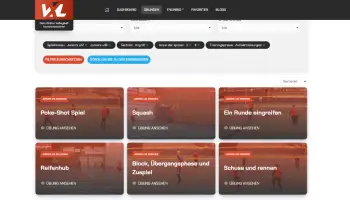
Instead of endlessly searching for random inspiration, you can use VolleyballXL for volleyball drills and find exercises that match your training goal. For example, passing, serving, attacking, defense, warm-up, or game-like exercises.

You can also use the practice tools to build more structure into your session, or explore the volleyball training plan page if you want to prepare your practices with a clearer long-term approach.

Want to understand what else the platform can do? Take a look at the features page, browse more coaching tips in our blogs, or view the plans and pricing when you are ready to get started.

Turn separate drills into a stronger practice

Choosing the right volleyball drill is not about finding the most creative or complicated exercise. It is about choosing the drill that fits your players, your goal, and your training session.

Start with your training goal. Then look at your players’ level, group size, available equipment, and the moment within practice. Build progression into your drills and make the outcome measurable.

That is how separate drills become a stronger practice.

Want to find suitable volleyball drills faster? Start with VolleyballXL, explore the practice tools, and prepare your next training session with more structure.

Populair blogs